Casey

Wife, Stay at home Mom of 3, Owner, artist and designer for Kidspired Creations

How Does Your Garden Grow? 5 Garden Activities

banner

Last Mother’s Day, my kids gave me a great planter for us to start a home garden!
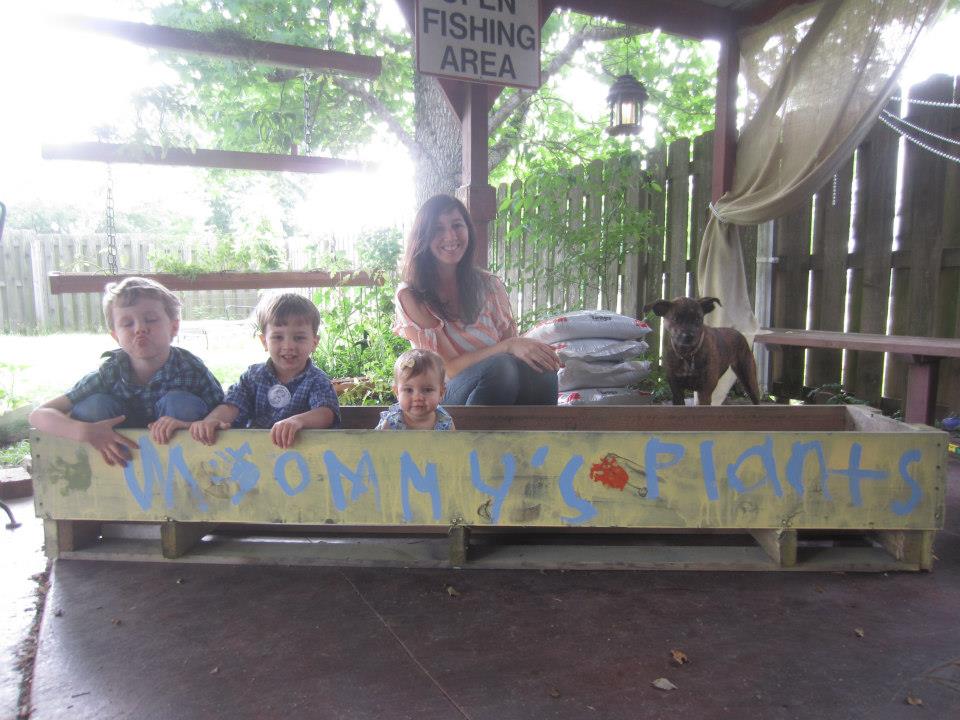
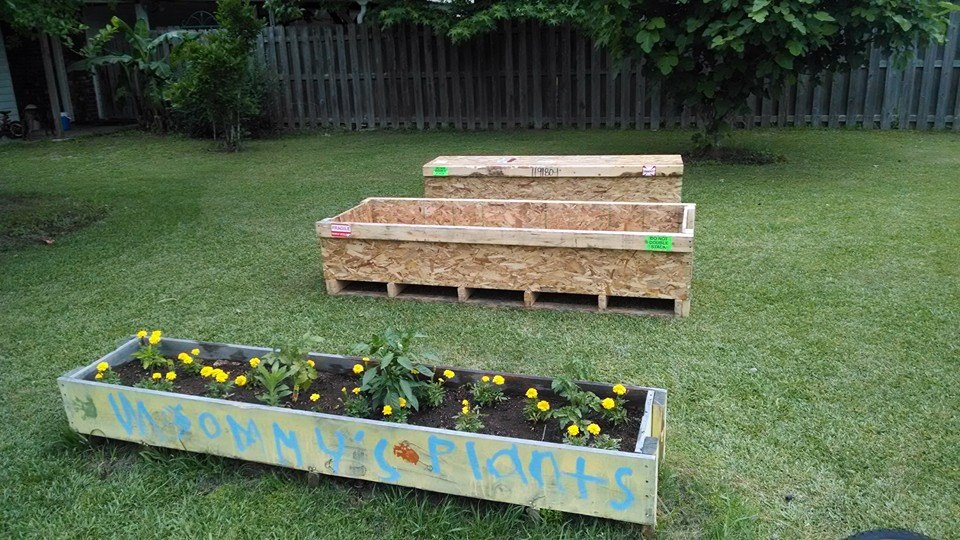
970018_10102217913375845_1261013702_n My husband works at a factory and they frequently get shipments of equipment that come in these long crates that are perfect for starting a garden (especially because they are free).  Keep your eyes peeled for wooden crates and pallets and you can get free planters as well!

This year we have a few more!
10251951_10103298616323475_9182112865024686846_n

Now, this is a little intimidating for me because I do NOT have a green thumb… but my husband is a little bit better at watering…and my kids are REALLY good at watering… a little too good as they sometimes over water.

So many early childhood teachers will grow plants in the classroom for kids to learn the parts of the plant, how to care for a plant, and what plants need to grow: soil, water, sun.  Here are a few activities for you to do at home to teach your kids about growing plants if you have or plan on starting your own garden at home.

1.  Journal:  Have your kids document plant growth.

  • Pre-schoolers – model drawing sketches of what your plants look like each week and then give them a crayon for them to do the same (may not look like much, but they will at least think they are drawing a plant).  Introduce vocabulary such as plant, green, grow, sun, soil
  • Pre-K – have them add words to their drawings (even if their words are just a mix up of letters – write what they are trying to spell underneath).  Vocabulary:  the name of the plants, ex: bell peppers, parts of the plant
  • Kinder – write a sentence or two describing the plant.  Vocabulary and discussion:  the name of the plants, ex: bell peppers, parts of the plant, why plants are important
  • 1st grade and above – a paragraph (minimum) documenting any changes they may see, how long they watered, what time of the day they watered, etc.  Vocabulary and Discussion:  the name of the plants, ex: bell peppers, parts of the plant, describe why plants are important, how they reproduce, nutrition and the benefits of eating home grown foods

2.  Predict:  Have your kids predict what is going to happen throughout the summer with their plants, use your journal from above to help document, then calculate results by a certain date at the end of the summer.

  • Calendar Math:  Using a summer calendar, mark the day you plant your plants.  Have your kids each choose a different date in which they predict they can start picking their ripe produce.
  • Measuring:  Using a ruler, guess the size of the produce and how tall the plants will become by the end of the summer.  Have them draw this out on poster paper to compare at the end of the summer.
  • Counting:  Predict the amount of produce each type of plant will produce.
  • Science – Weather:  predict the number of rainy days versus sunny days
  • Comparison:  predict what type of plant will produce the biggest/smallest, most/least amount, greenest, etc. produce

3.  Experiment:  Get several seedlings that are the same type and are all similar in size.  Experiment with different amounts of sunlight or soil type or watering schedule (choose one) to see what is the optimal amount for that particular plant.  Plant several seedlings in each of the different conditions to get the best average outcome.  And, go back to the first activity:  journal 🙂

4.  Create a Cookbook:  As your plants are growing, decide as a family what you are going to use your plants for and create a family cookbook together!  Take pictures of your growing plants to include in the “ingredients” section of each recipe.

BONUS:  Include a raw versus cooked taste test of each fruit/vegetable to include that 5th sense that we often don’t get to use in a classroom.

5.  Dissect the Plants:

  • Science:  learn about the different plant parts including the parts you don’t see… inside the stem, the roots, inside the fruit and flowers.  When you are finished, use the roots, stem, leaves, flowers to make art on a poster board.
  • Math:  Compare/Contrast the different types of plants:  length, leaf shape, fruit, root length and thickness and number of roots
  • Art:  Create leaf prints by placing a piece of paper on top of the leaves and using the edge of a crayon to etch the shape of the leaf.  Draw the type of produce next to each leaf.

BONUS:  One of my friends started a private Facebook group for some of her friends who wanted to start a home garden.  On it we are sharing pictures and knowledge with each other and when the produce is ripe, we will be having garden picking parties!  It is nice to see what everyone else is growing (and these ladies know way more than I do about gardening so it’s helpful too)!  I encourage you to start a similar group for your friends with green (or slightly unripened) thumbs.

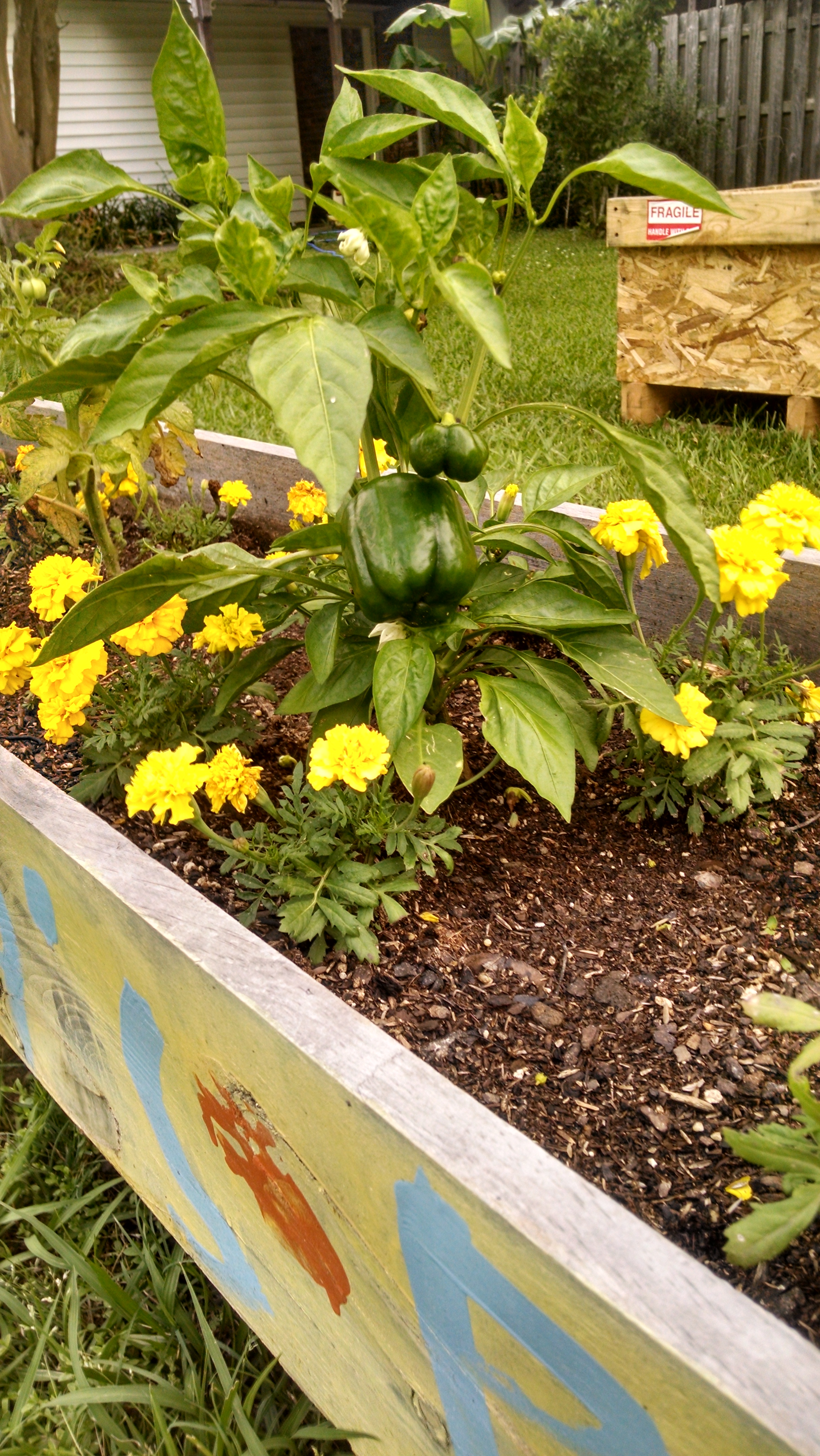
It is so wonderful seeing how excited my kids are to watch our plants grow!  Right now, we just have bell peppers and cherry tomatoes, but we hope to fill our other planters soon!

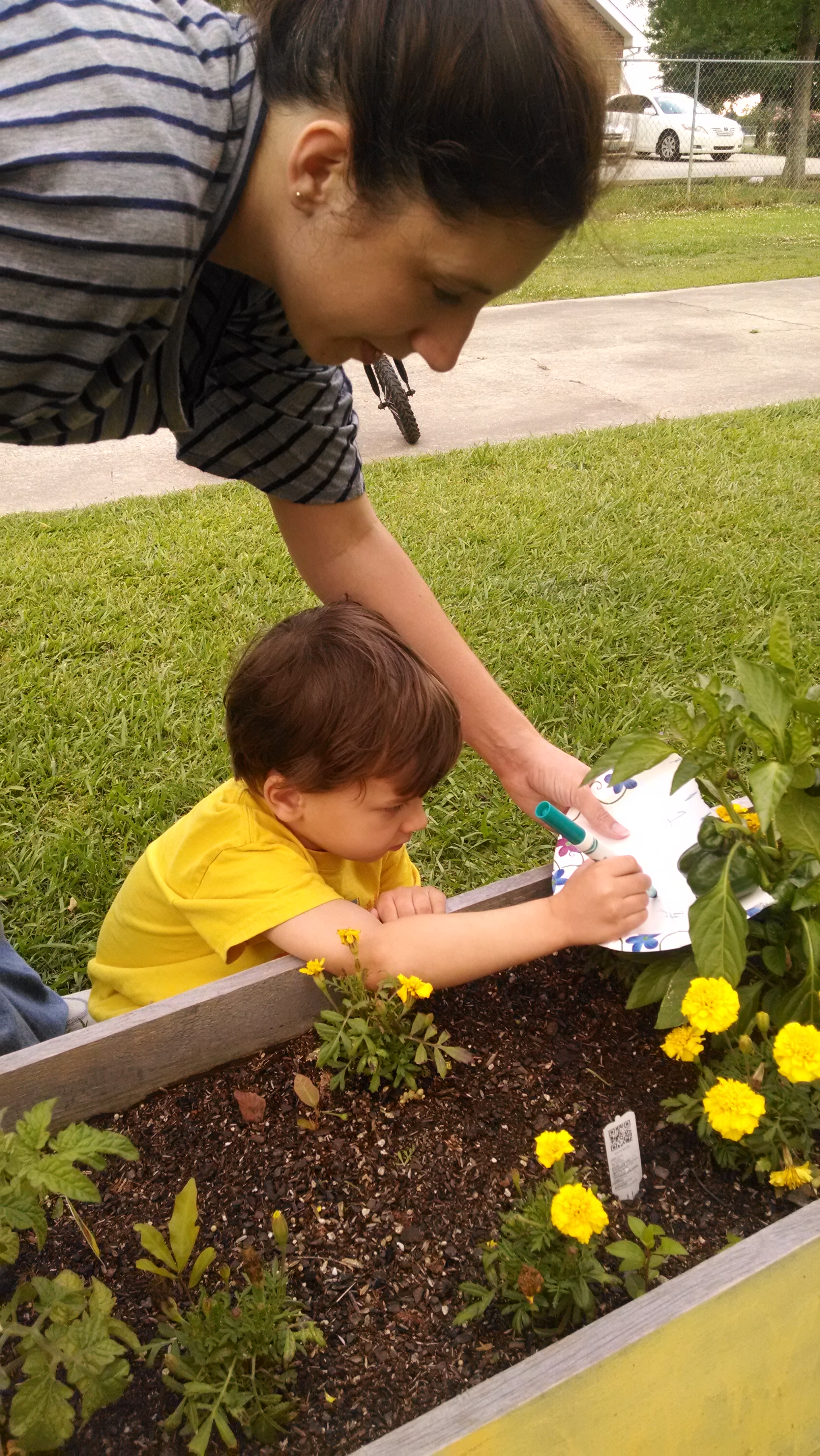
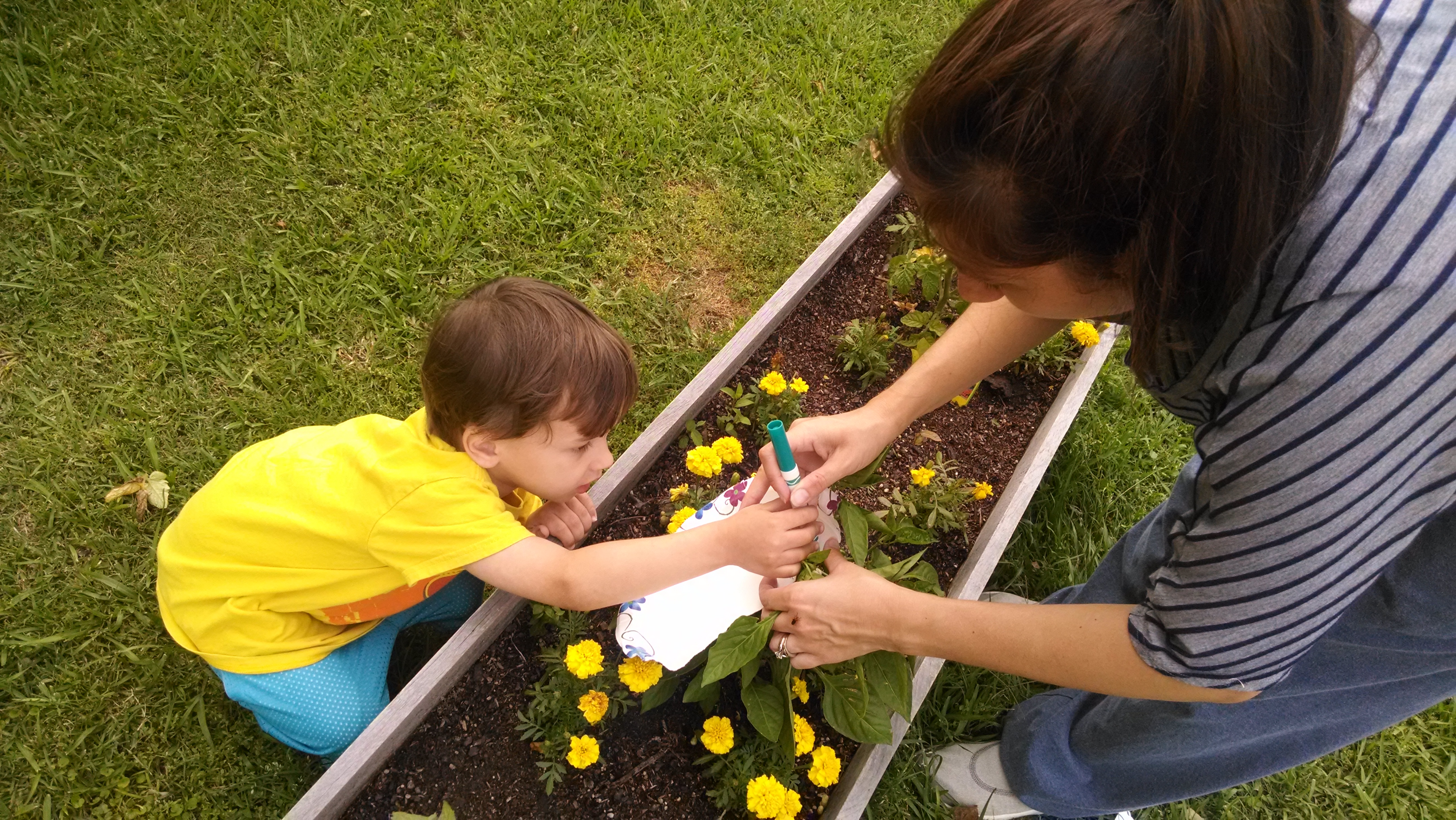
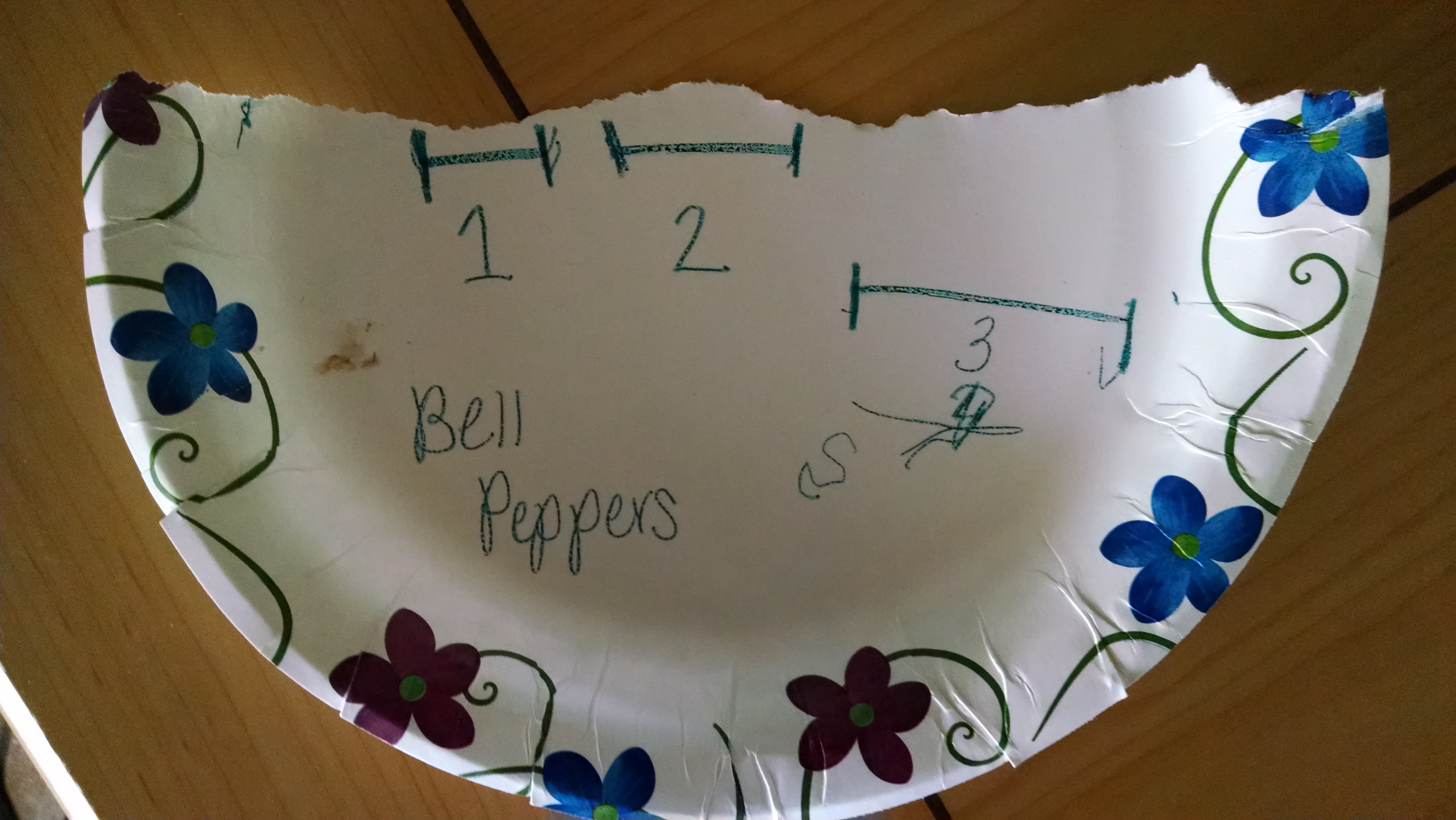
Leyson and I tore a paper plate in half to draw our measurements of the peppers (paper plates are sturdier than sheets of paper thus easier to measure the peppers on).  We used a marker to draw a line on each side of the paper and later use a ruler to measure from line to line.  We numbered our peppers 1, 2 and 3.  Measure them week by week so you can see how much they grow in one week.
IMG_20140512_113850497

IMG_20140510_191016269 IMG_20140510_190829946

IMG_20140510_191123344_HDR

How does your garden grow???  How have you involved your children in your garden?
Room Rating – Operation: Clean Up!

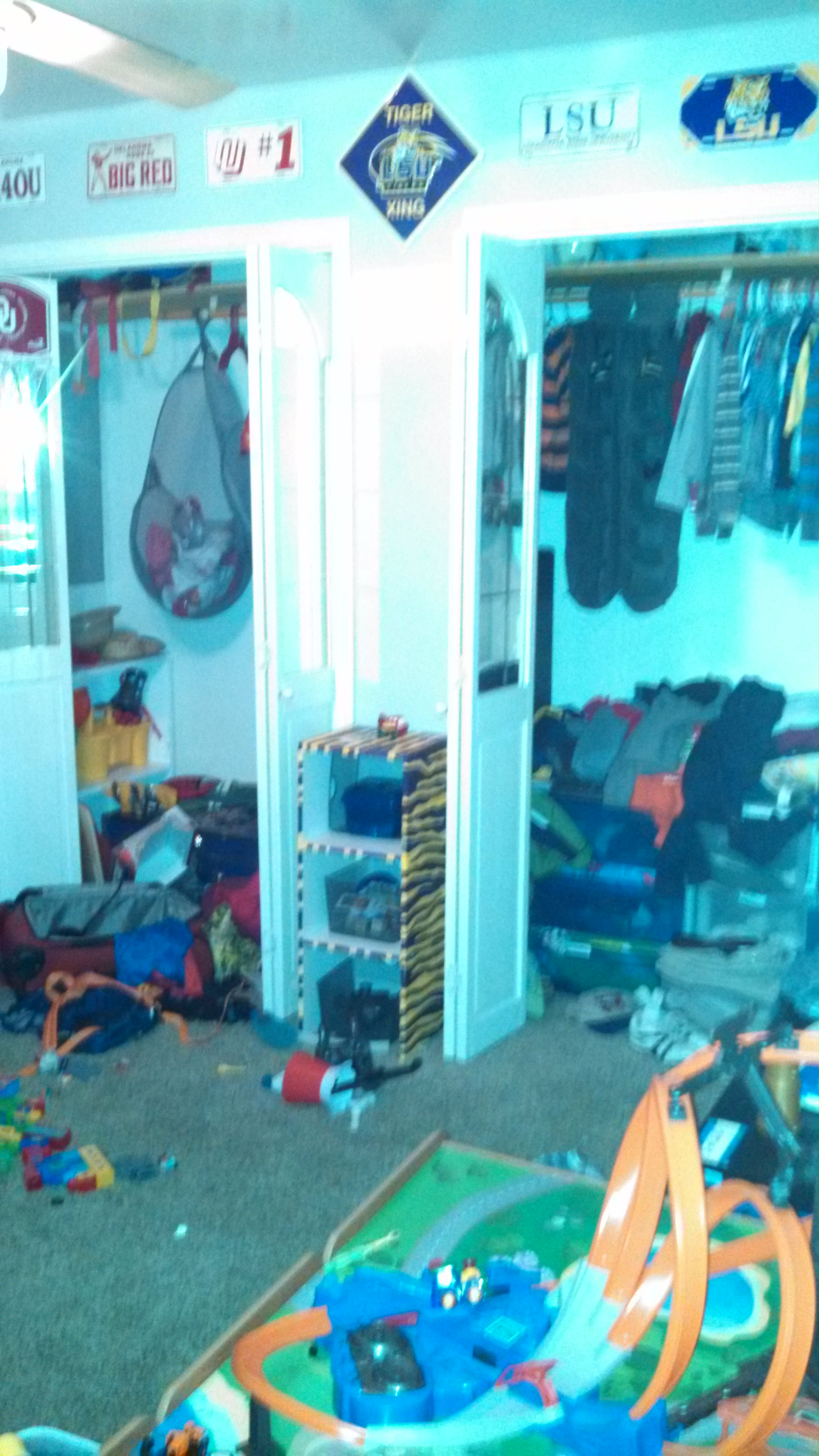
So this happened…
IMG_20140226_195707_175 Which was then followed by a few impulse buys… IMG_20140227_111435_057

…and a complete new behavior modification system to discourage future closet explosions.

I introduce to you…

The Room Rating

(located right outside of their bedroom door for those times when it is so messy I can’t even walk into it)

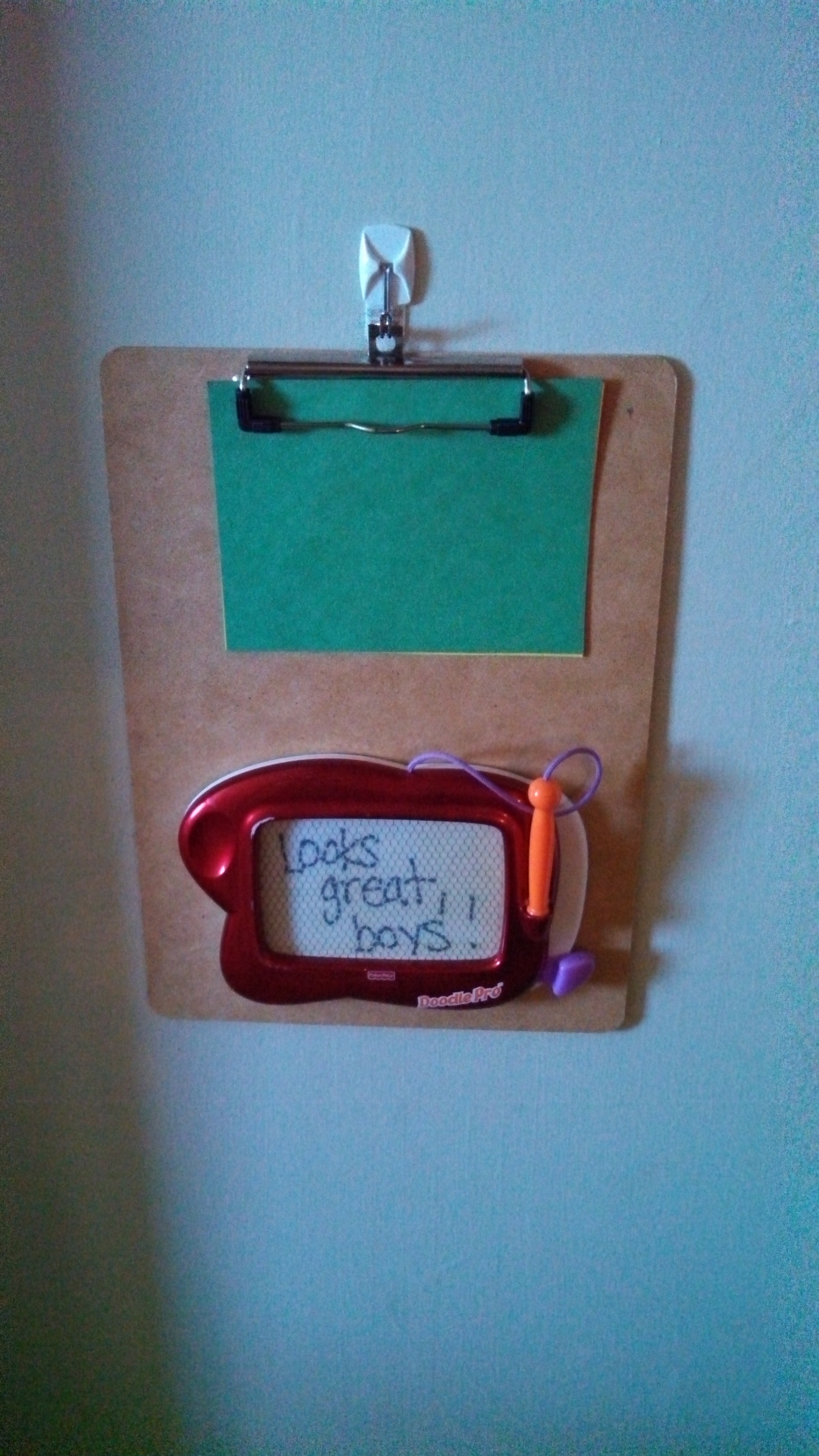
Green:  Mommy approves!

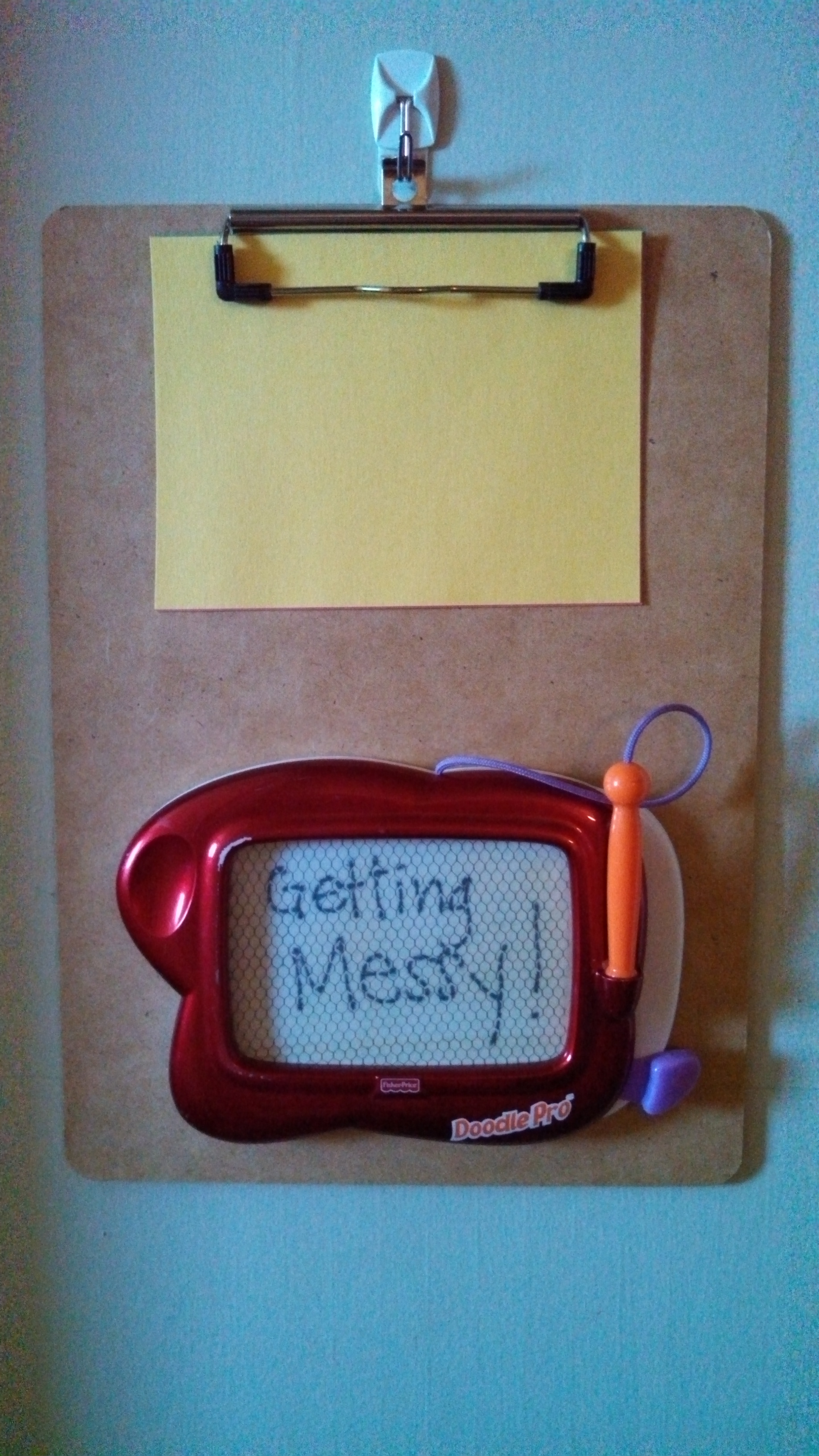
Yellow:  Slightly messy.  You will have to clean it before bed.

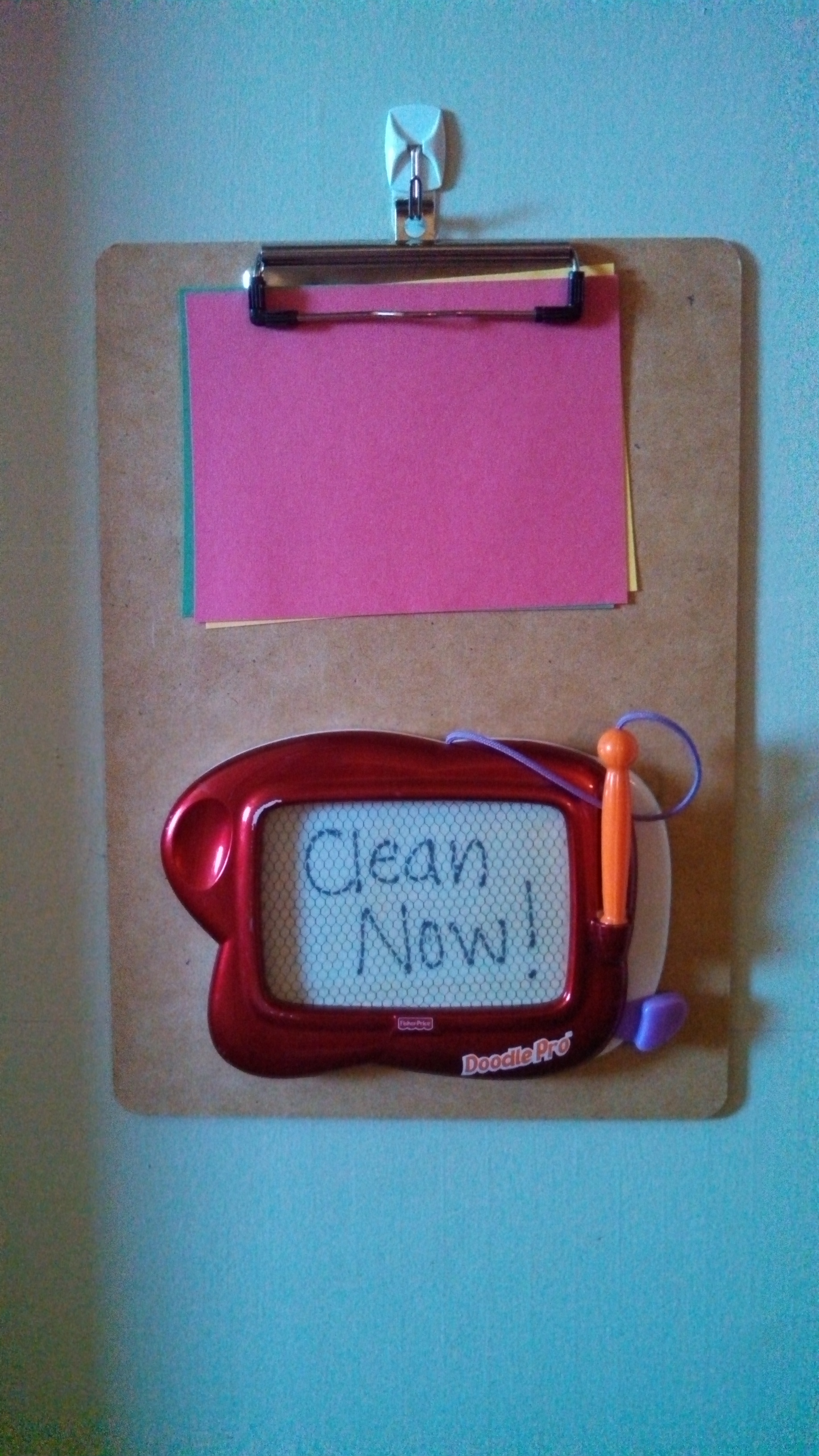
Red:  Total wreck.  You may not come out of your room until it is clean.

or, according to my husband,

Green:  Mommy approves!

Yellow:  Daddy approves!

Red:  Just shut the door.

IMG_20140227_153452_911

IMG_20140227_153533_361

IMG_20140227_153617_370

I was looking for a dry erase board to put on my clipboard, but found this doodle pad instead! And then I thought that this is pretty genius so I don’t have to leave a marker within reach of the kids… I’d definitely have another mess to clean up!  I used Command strips to secure it to the clipboard.

Check back in with me in a week and let’s see if we stick to this!  So far, the kids are excited about trying to keep it on green!  Green = Clean!  Say it with me!  Green = Clean!

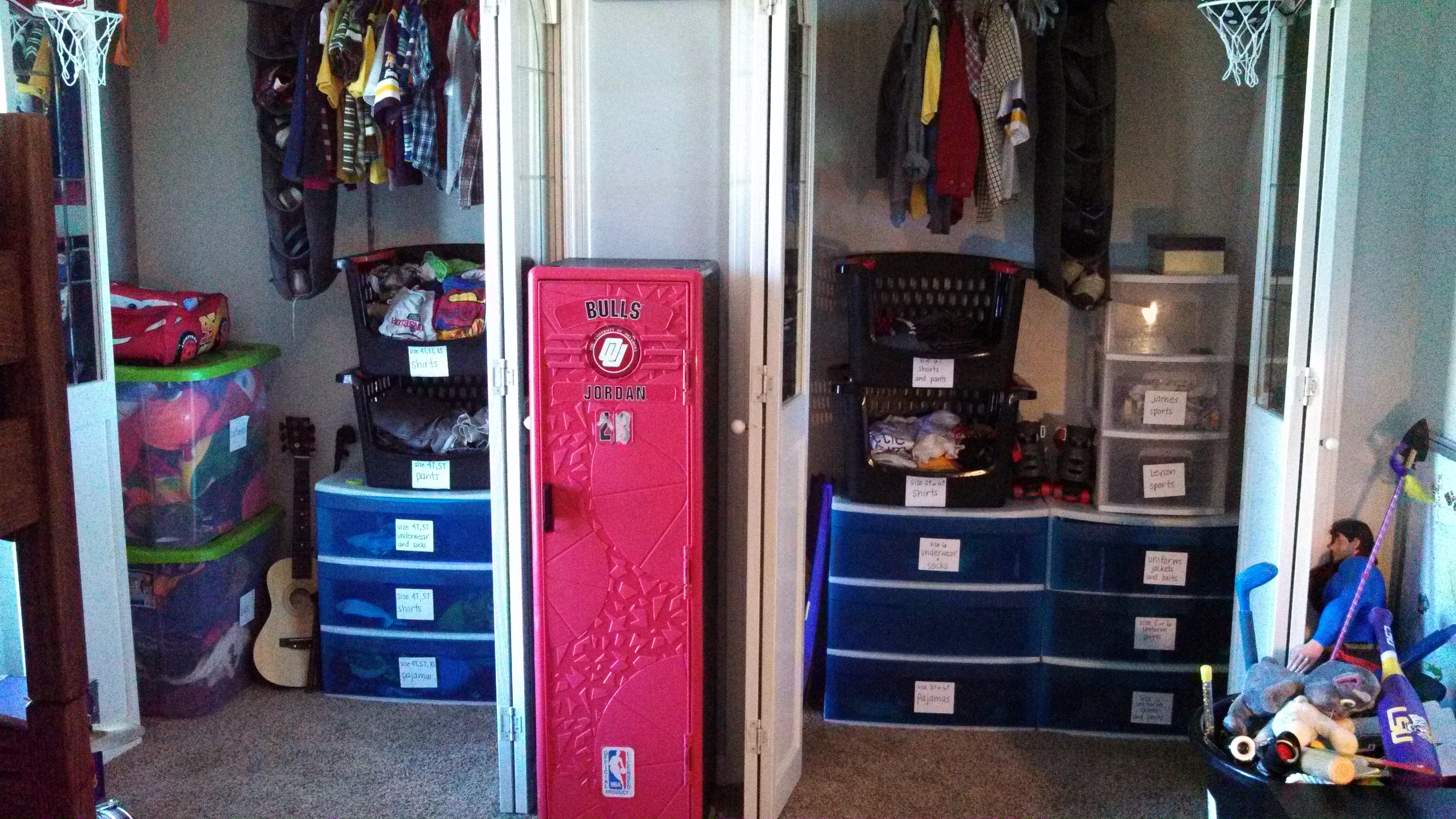
IMG_20140227_142415_717

Everything is nice and neat, and labeled by size and article of clothing so that they can read the tags on their clothes to determine who they belong to.  Once they are sorted, they know exactly where they need to go!  Definitely encouraging some independence (and help around the house) here!

4T, 5T, XS = L’s clothes

6+, S+ = J’s clothes

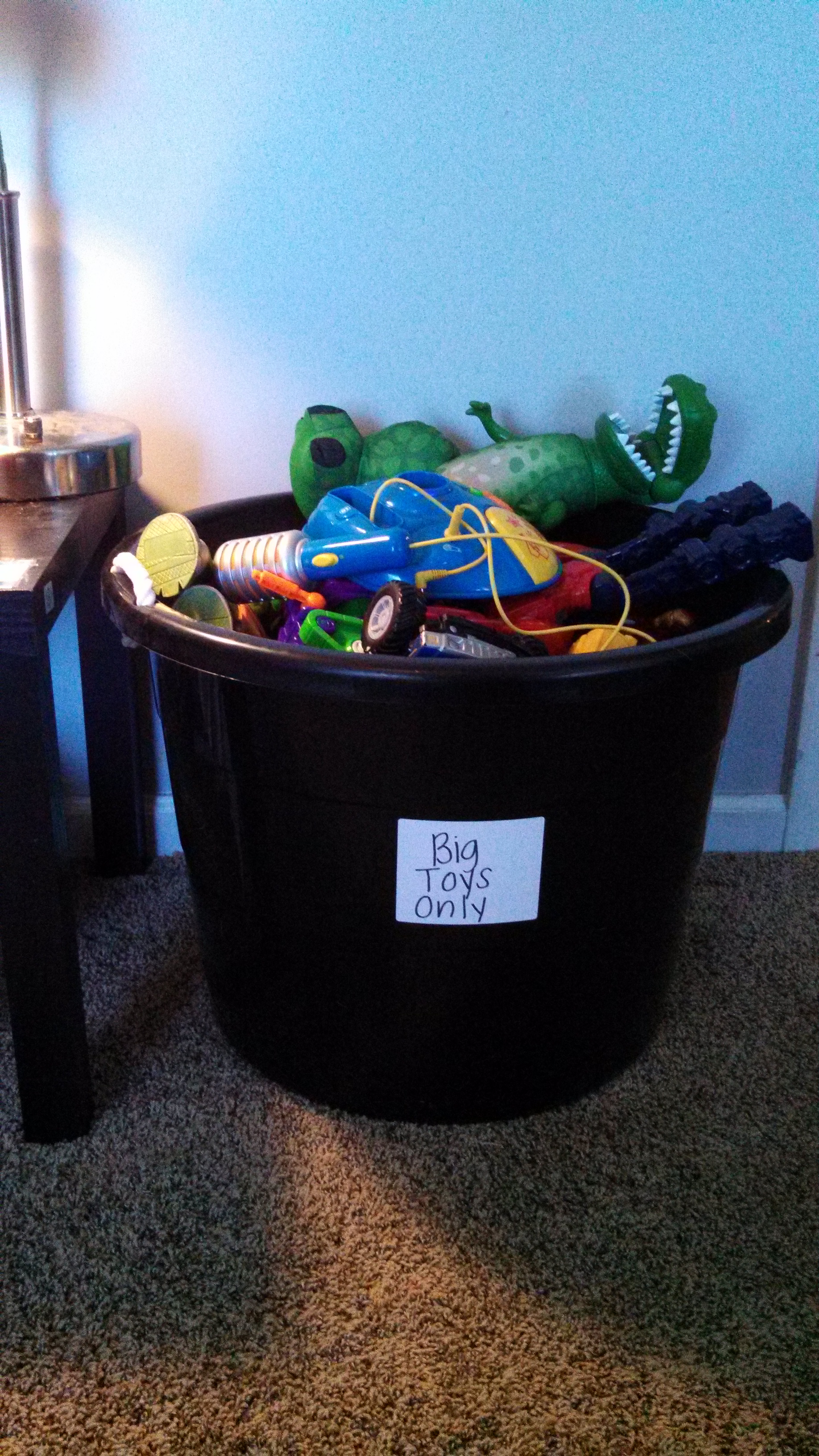
Oh, and another thing new we’re trying?  Bins for BIG TOYS and bins for small toys.

No more organizing by type of toy for us.  It was just taking way too long to clean.  The new rule is that if it is larger than your hand, it goes in the bin for BIG TOYS.  If it is smaller than your hand, it goes in the bin for small toys.

IMG_20140227_142216_442

And BONUS x 2!  All these labels are GREAT for increasing print awareness for my 4 year old and encouraging reading for my 6 year old!

Mommy Teacher Spotlight: Little Free Library

By:  Erin Walker

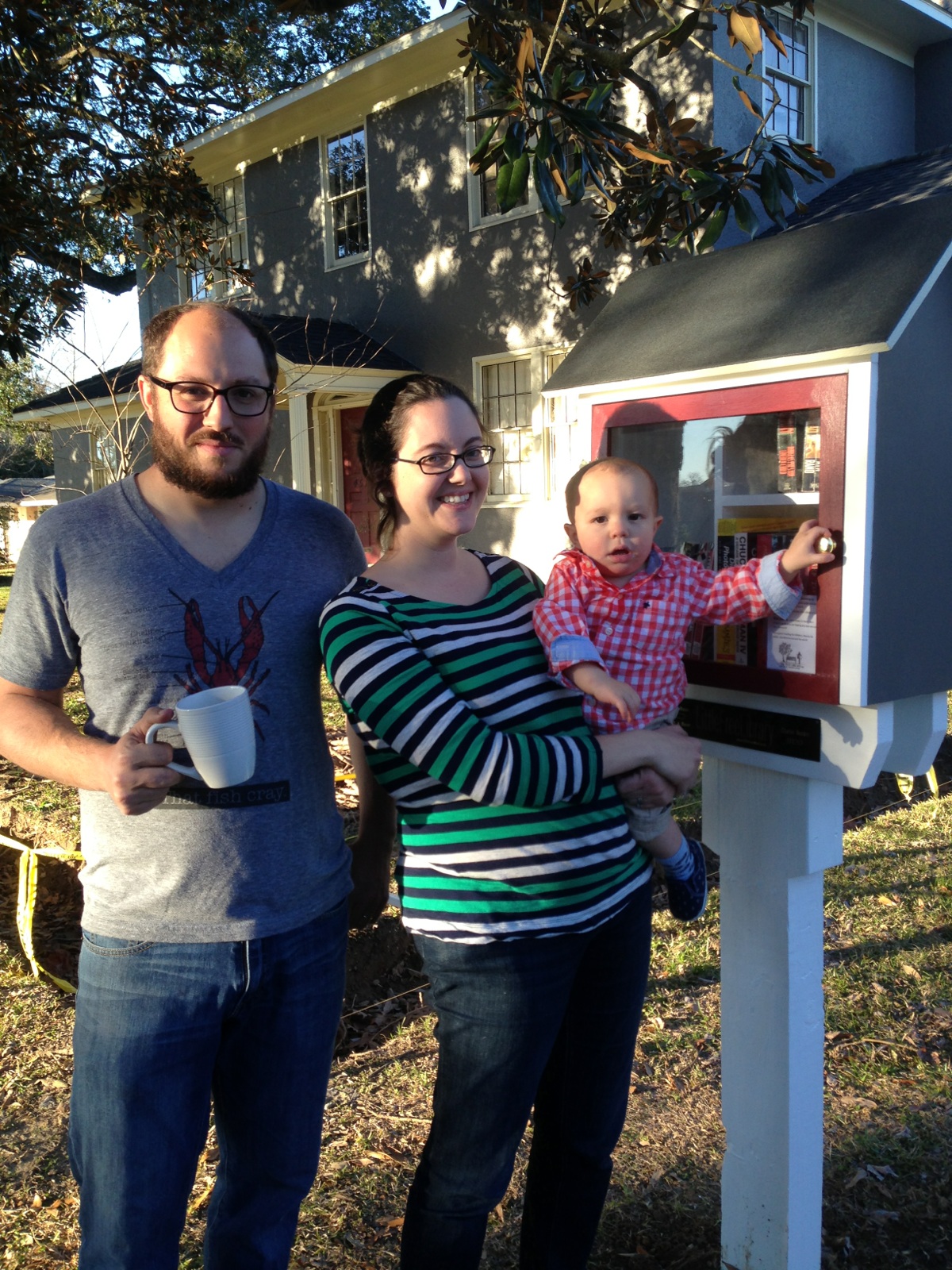
5-2 I read about Little Free Libraries in a local newspaper and fell in love with the idea. The basic concept is that a Little Free Library belongs to the community, and anyone can take or donate a book. When you’re finished with the book you can return it to any LFL location around the world or pass it on to a friend.

The first decision was where to put it. People locate their LFLs near their church, school, home, or place of business. We decided to place ours in our front yard because our house is located at the entrance of our neighborhood and faces a street with lots of pedestrian traffic, so we thought our Little Free Library would be used by neighbors and passersby. Having it at our house also makes it easy to maintain, and it’s fun check out the latest activity!

Next, the design: there are so many possibilities for how to design your library! You can buy a pre-made one from littlefreelibrary.org, use their plans to make your own, or create your own unique design. My dad built ours from plans on the LFL website and painted it to look like our house.

Choosing books: some LFLs have a specific theme, like children’s books or hobby books, but we live in an eclectic neighborhood with young families, retirees, college professors, and lots of college students walking by, so we filled our LFL with a variety of books. We included novels, travel books, hobby books, children’s books, etc. We’ll keep an eye out for what kinds of books people seem to like and try to stock more of those types of books. We’re also planning to have a party to invite friends and neighbors to visit our LFL and bring a buck and a book to help keep it stocked.

Before placing the books in our LFL we imprinted each one with our special LFL seal (ordered from http://www.littlefreelibrary.org) so that when the books are passed on people can see where they came from. We couldn’t imprint the thick pages of children’s board books, so we just placed a sticker inside those.

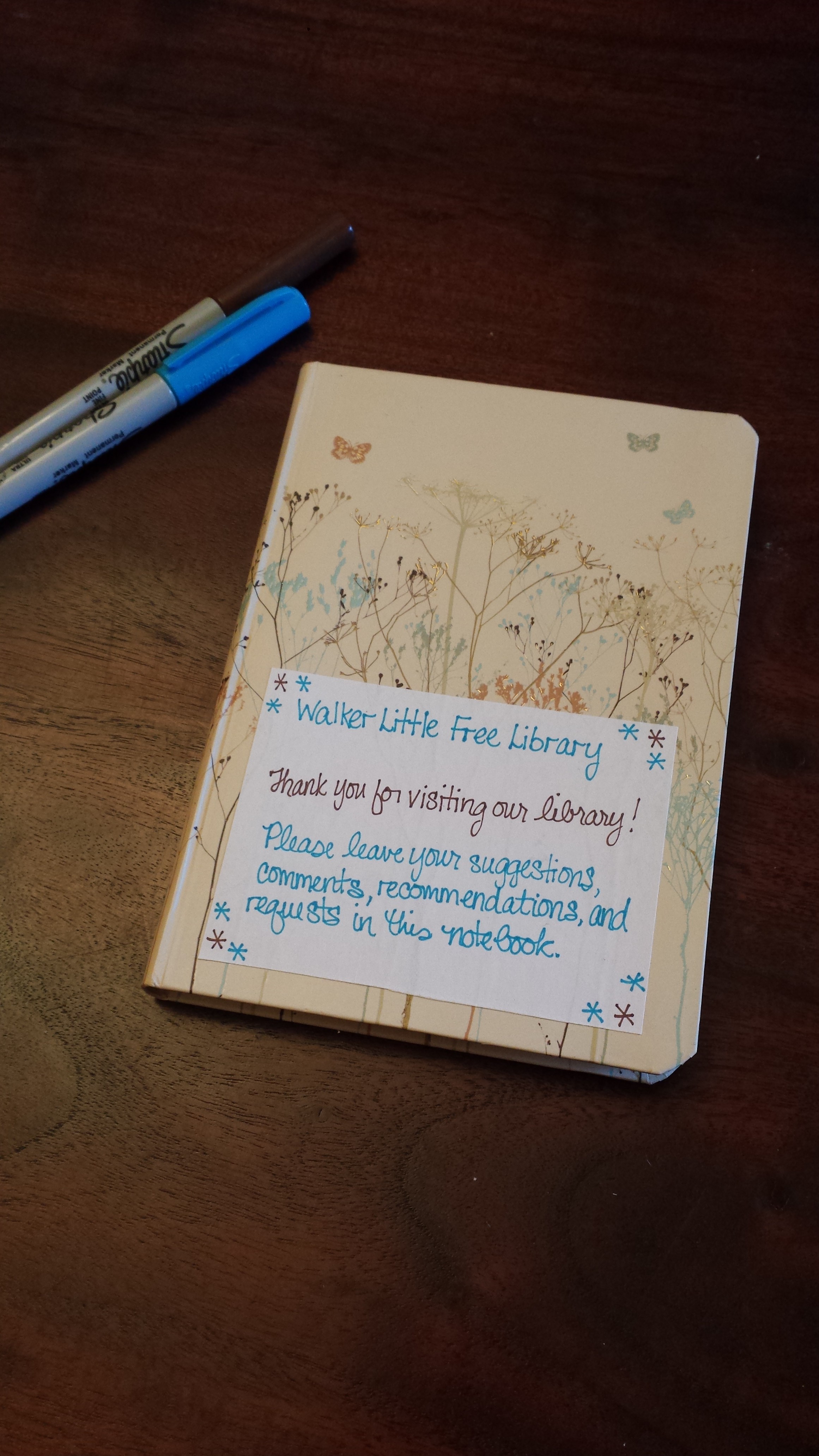
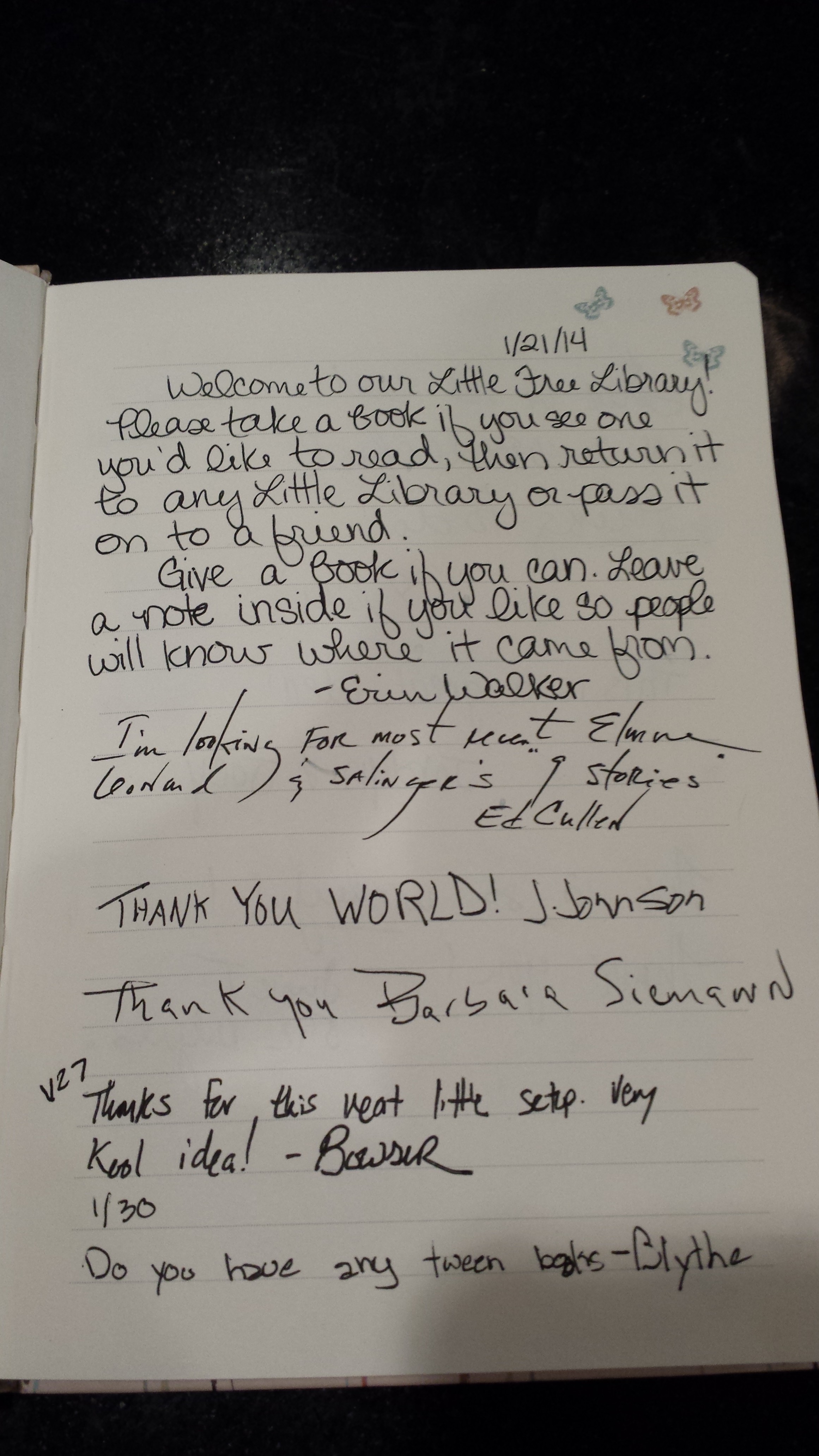
We also placed a notebook in our LFL for people to write comments, suggestions, reviews, and requests.  Reading the notebook is a fun way to feel connected to the people who enjoy our LFL.

3-2             4-2

To teach people about our LFL we posted our LFL plaque and some basic instructions, and I printed fliers with more detailed instructions and placed them inside the library for those who wanted to know more.

We also registered it at LittleFreeLibrary.org so people can search for it.

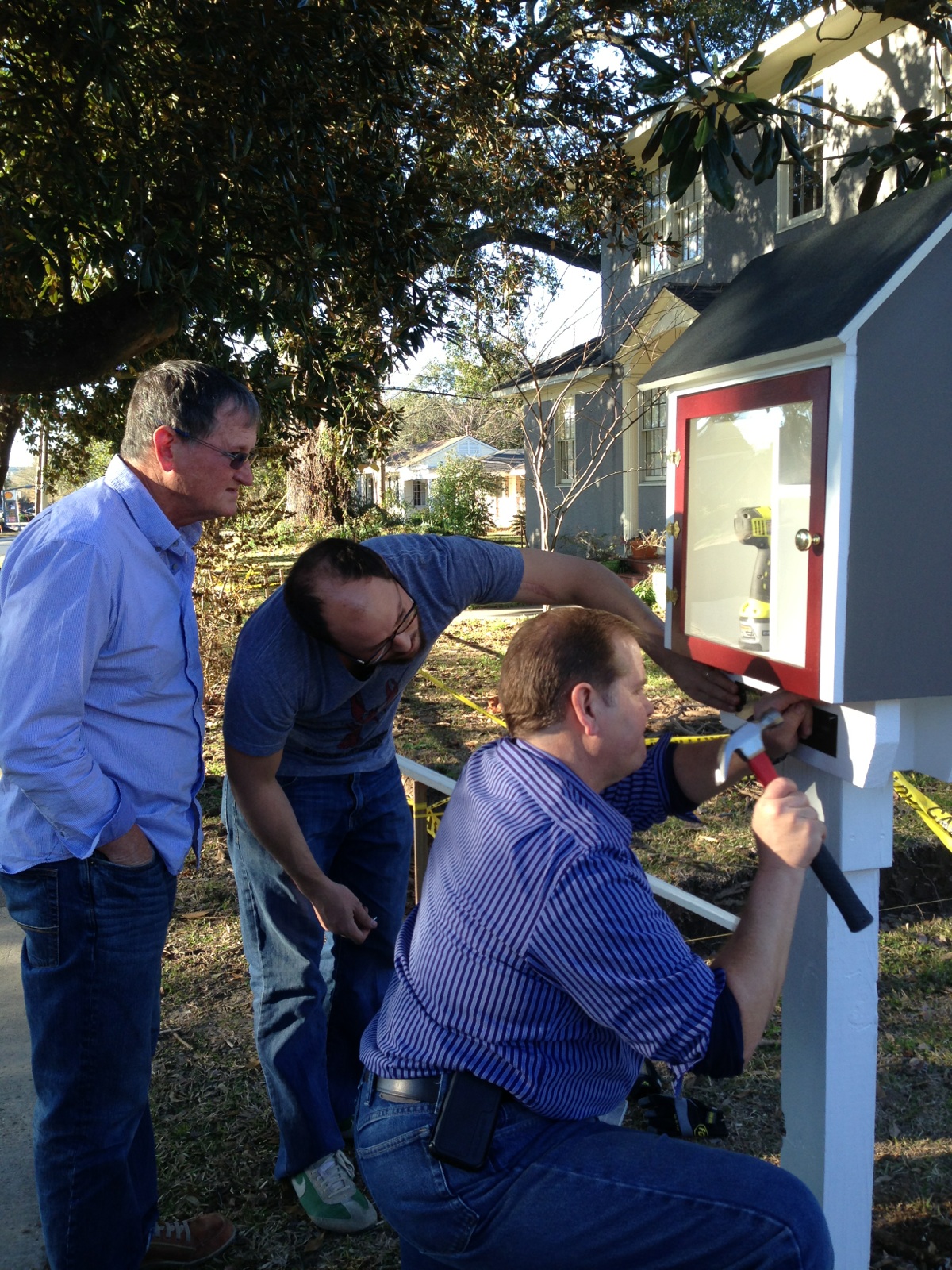
During the installation several neighbors stopped by to ask what it was and offer to donate books.

6-2

A few hours later we went outside to admire our LFL and noticed that someone had already donated a book!  It’s exciting to walk outside and see what people have taken from and added to the library. I’m looking forward to when my son is old enough to choose books to donate to and borrow from the library. For now he just has fun opening and closing the door.

2-4

If you’re in the Baton Rouge area stop by or visit our Facebook page at Walker Little Free Library.

Erin Walker is a teacher, Industrial/Organizational Psychologist, and soon to be stay at home mom. She earned her B.S. in Psychology and Sociology from Louisiana State University and her M.A. and Ph.D. in Industrial/Organizational Psychology from University of South Florida. She’s taught at University of South Florida in Tampa, FL; Saint Joseph’s School in Shreveport, LA; and Catholic High School, Saint Joseph’s Academy, and Louisiana State University in Baton Rouge, LA. She currently works as a Selection Consultant in the telecommunications industry. She lives with her husband, 15 month old son, and two dogs, and is expecting a baby girl in July. She very occasionally blogs at firstyoumakearoux.typepad.com.

Valentine’s Day Mailboxes

Eeeek!  Tomorrow is Valentine’s Day!  Leave it to me to wait to the last minute to even think about what to do.  I decided a few years ago that I wanted to be intentional about the holiday – teaching my boys to be thoughtful and caring through acts of kindness – so we would always make our own cards and gifts for our classmates.  Well, that was a few years ago, and this is now… and phew!  2014 is flying by and February 14th has crept up on me.

My Pinterest-loving self is really annoyed with my lack-of-planning self for just allowing the boys to choose store-bought Iron Man hologram cards that they simply wrote “To: Friend, Love, James/Leyson” on 20-something of them.  But, boy!  My kids were soooooo excited about those holograms.  So, they win this year.

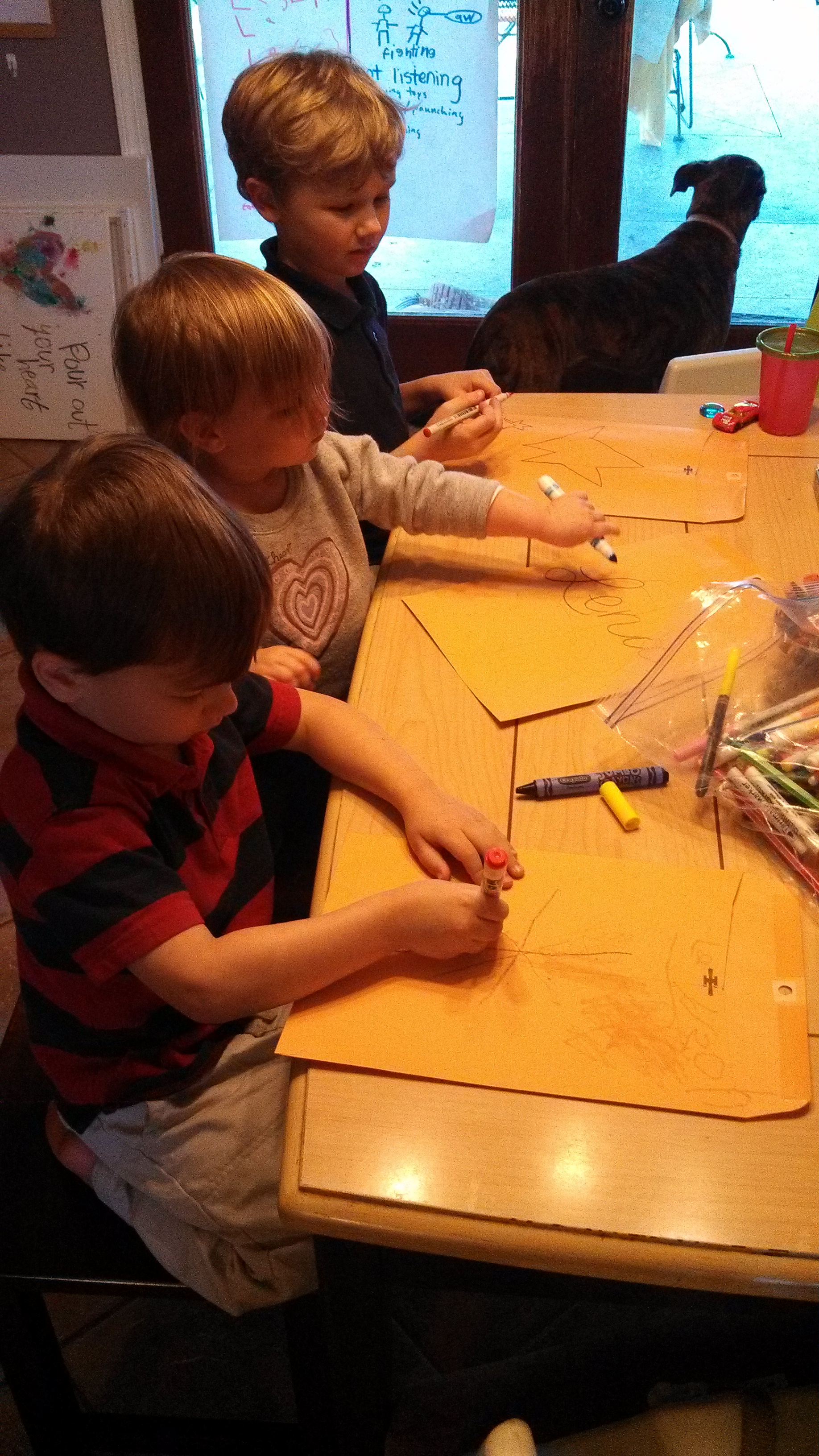
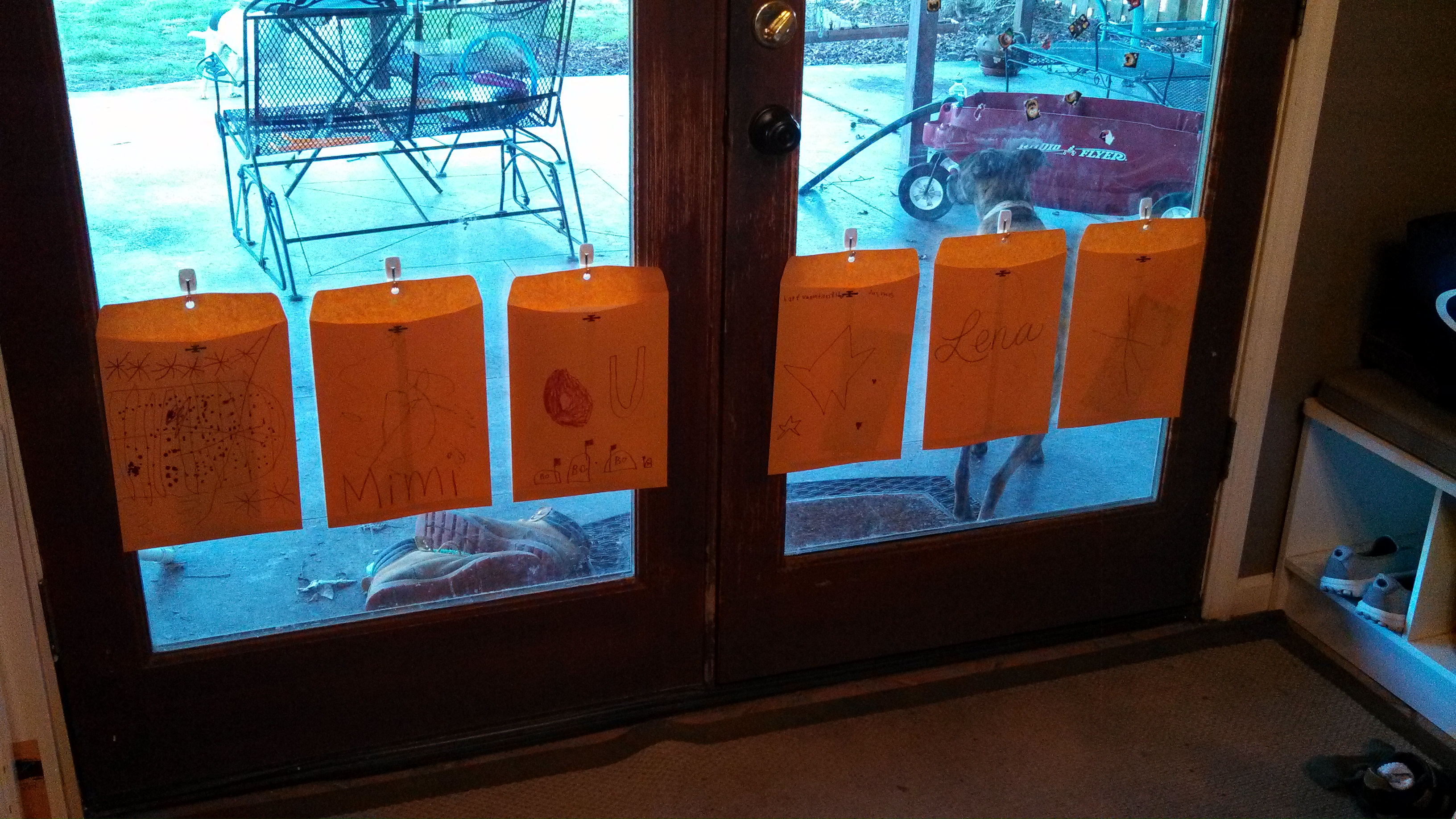
I did decide (at about 4pm today) that we were at least going to be intentional about what we exchange between our family members.  The kids made “mailboxes” out of manila envelopes for each of us.

IMG_20140213_163349_150

IMG_20140213_165832_847

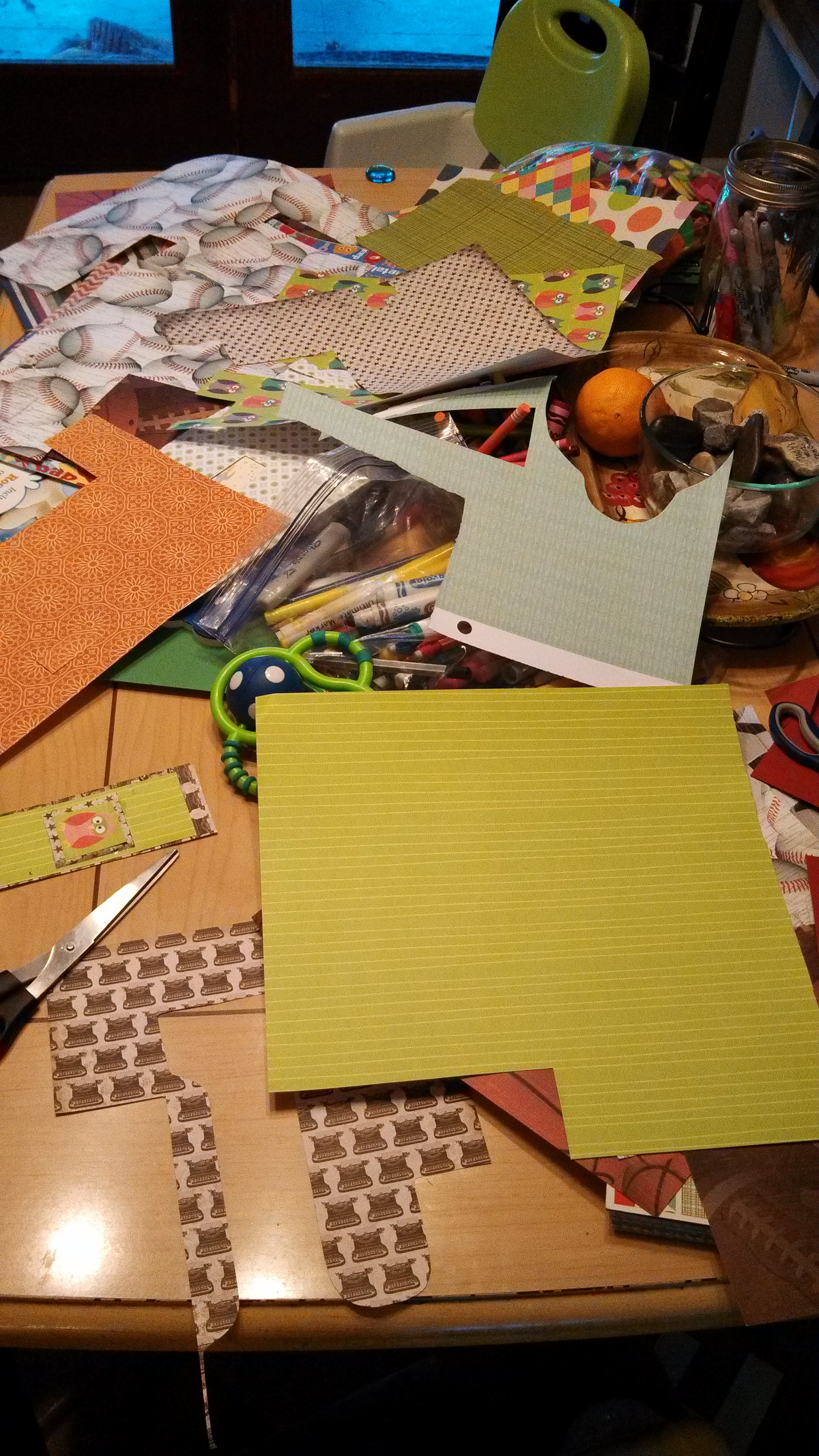
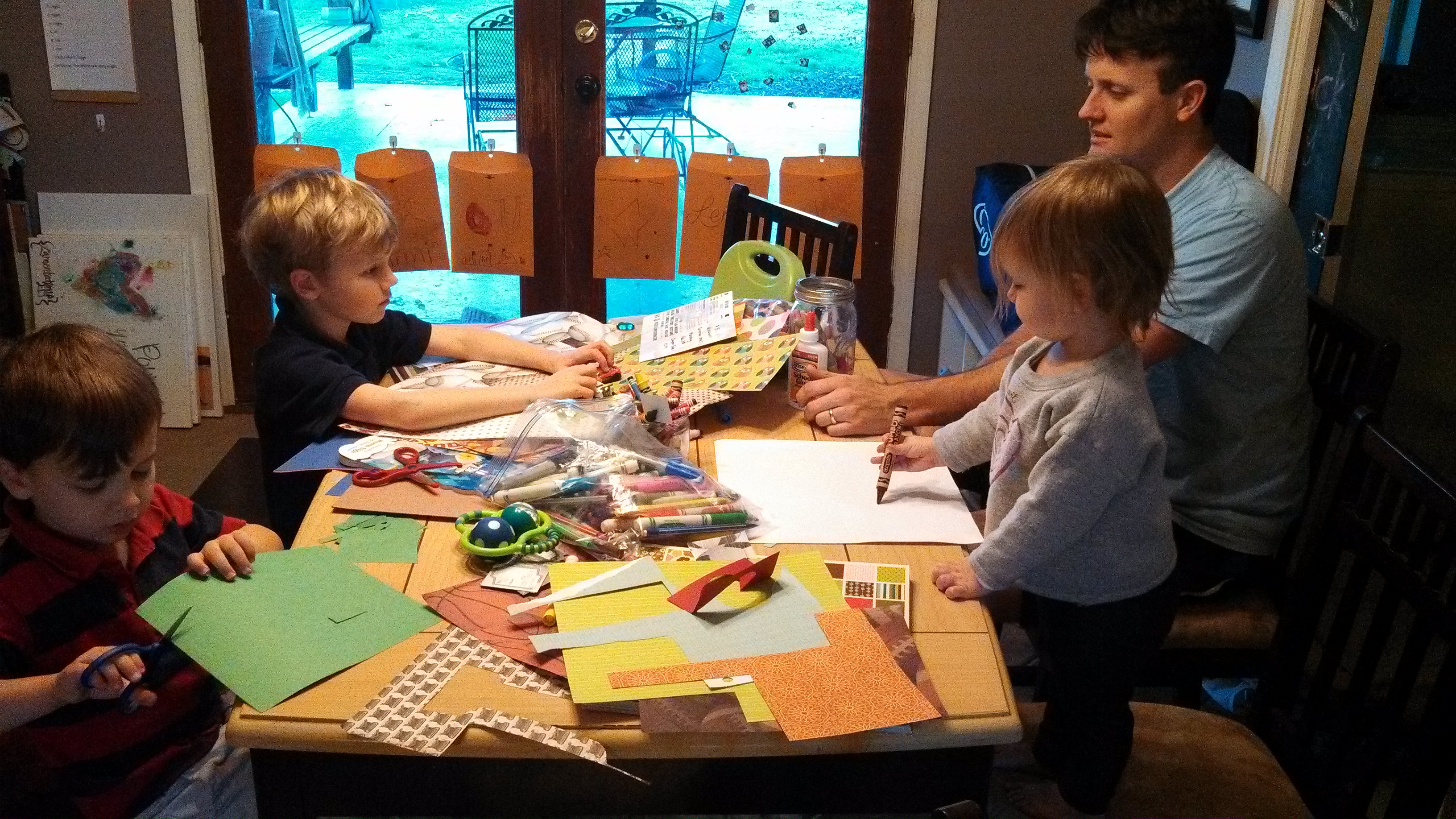
I pulled out all of my scrapbook paper, glue, crayons, markers and scissors and let the kids go to town!  Leyson enjoyed playing with the scissors so much he pretty much made confetti the entire time, and my husband and I made bookmarks for all of the kids to go with their books that we bought them.

IMG_20140213_172115_753

IMG_20140213_172654_075

The kids kept running back and forth from the craft table to the mailboxes, delivering their own personal “letters” to Mom, Dad, Brother, Sister, Mimi and their visiting cousin and aunt.  I can’t wait to open these all tomorrow morning!

So, yes, I realize this post is kinda really last minute (I apologize)… but this is still a great activity that you can do tomorrow or sometime this weekend!  Happy Valentine’s Day… even if it is a little rushed!  🙂


10 Sticky Note Games for Pre-Readers

It never fails… sticky notes never last long in my house.  I JUST bought new ones too!  But since my 1 year old already took them all apart, I figured I would put them to immediate use with my 4 year old.

We played a little game today that you can play with your little one once he/she has mastered letters of the alphabet and the sounds that each letter makes; also, he/she must have a basic understanding of blending/segmenting sounds (/b/ /a/ /t/ = bat) and rhyming/word families (bat, cat, sat, mat).

Materials needed:  sticky notes, marker/pen

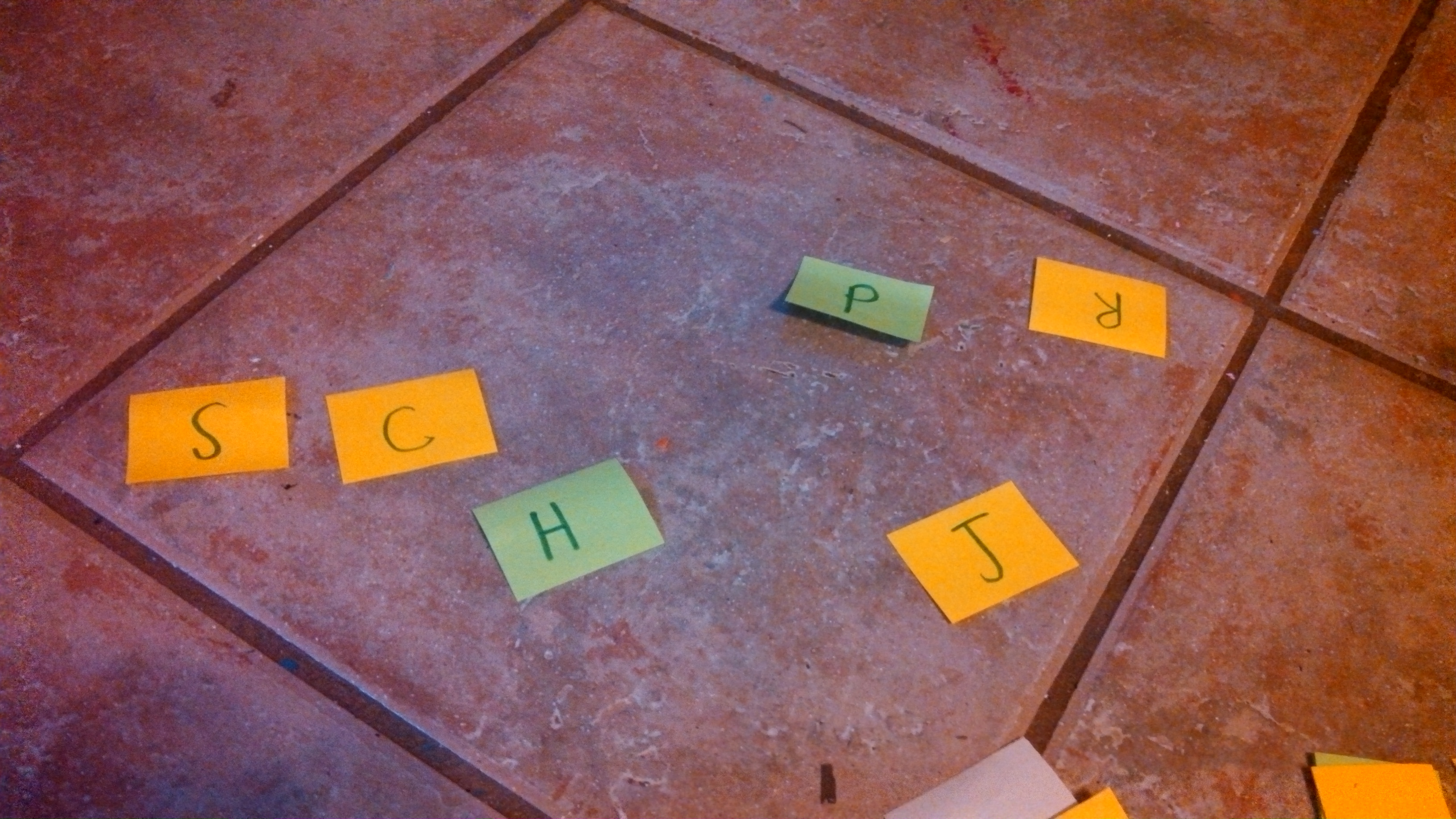
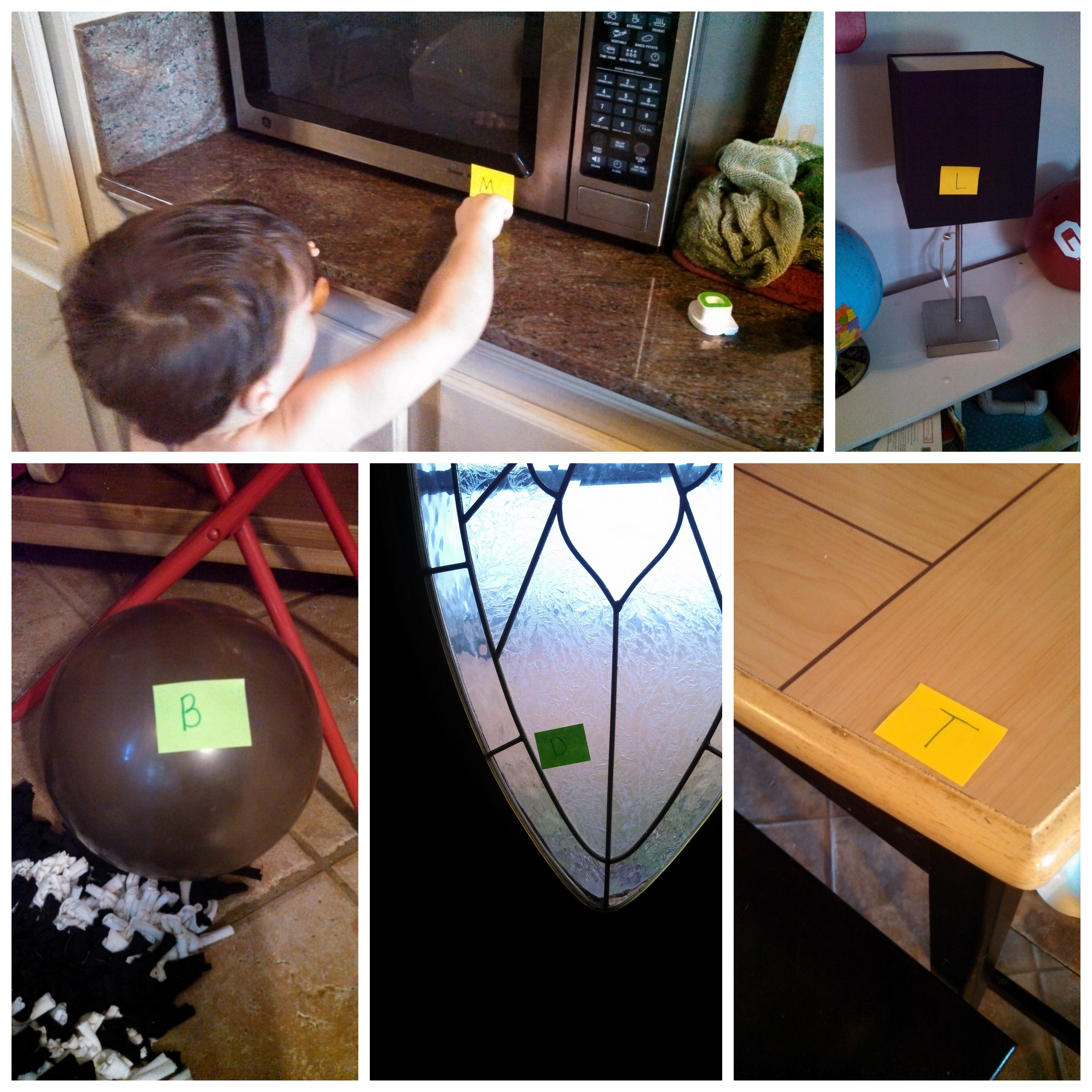
Version #1:  Write letters on each sticky note.  Your child must find things around the room that start with the letters on the sticky note and post it on that object!

IMG_20140127_112150_513

sticky note post (I learned that it is super cruel to hand my son the letter “q” when there is no quilt in sight.)

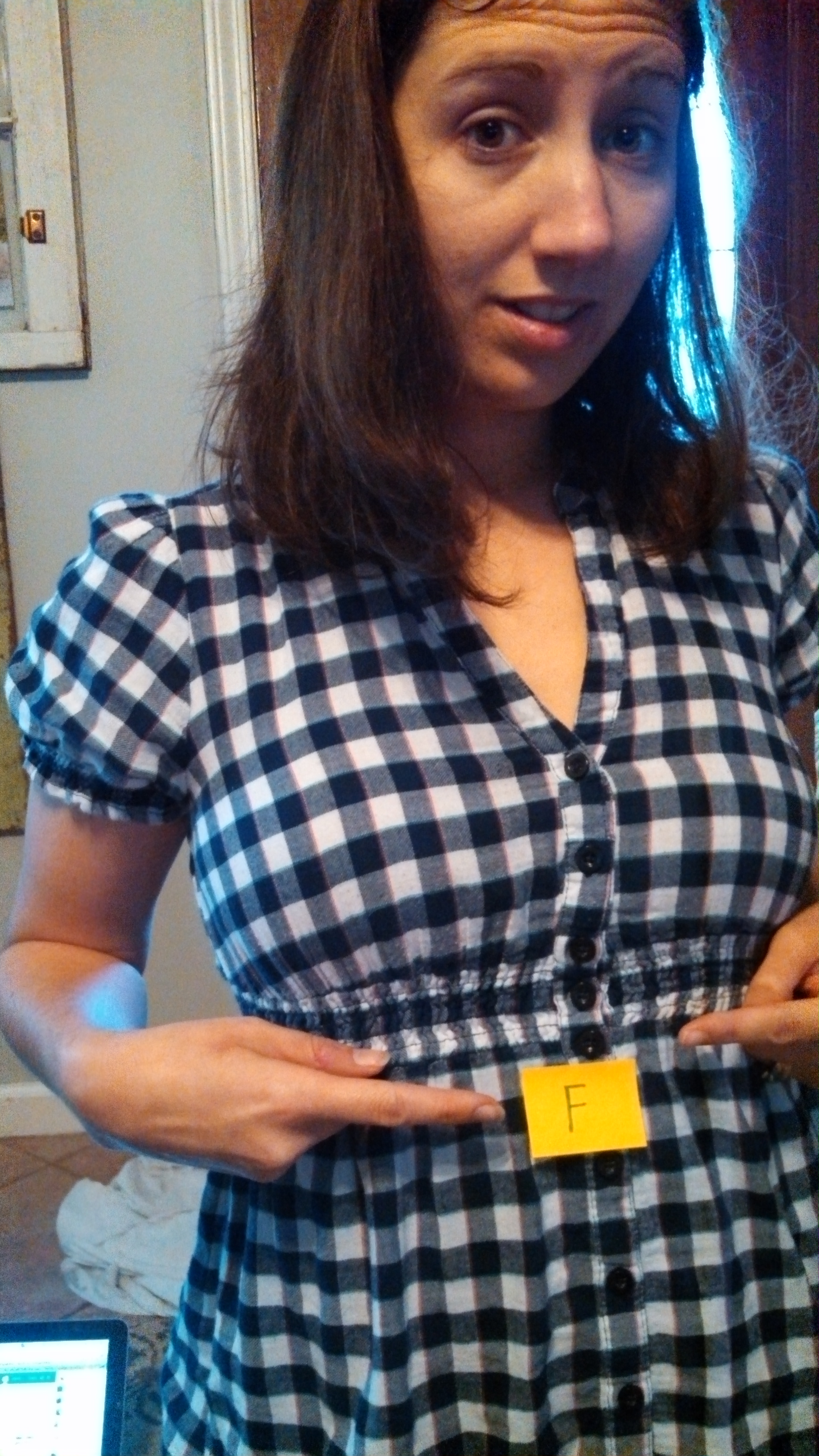
I also learned not to give my child the letter F.  He immediately said “FAT!  I’m gonna stick this on your belly!”

IMG_20140127_112018_441


My, my.  Kids are just too darn cute for their own good ::sigh::.

Version 2:  Play “I Spy”… “I spy something that starts with /n/.” Let your child come up with some too!

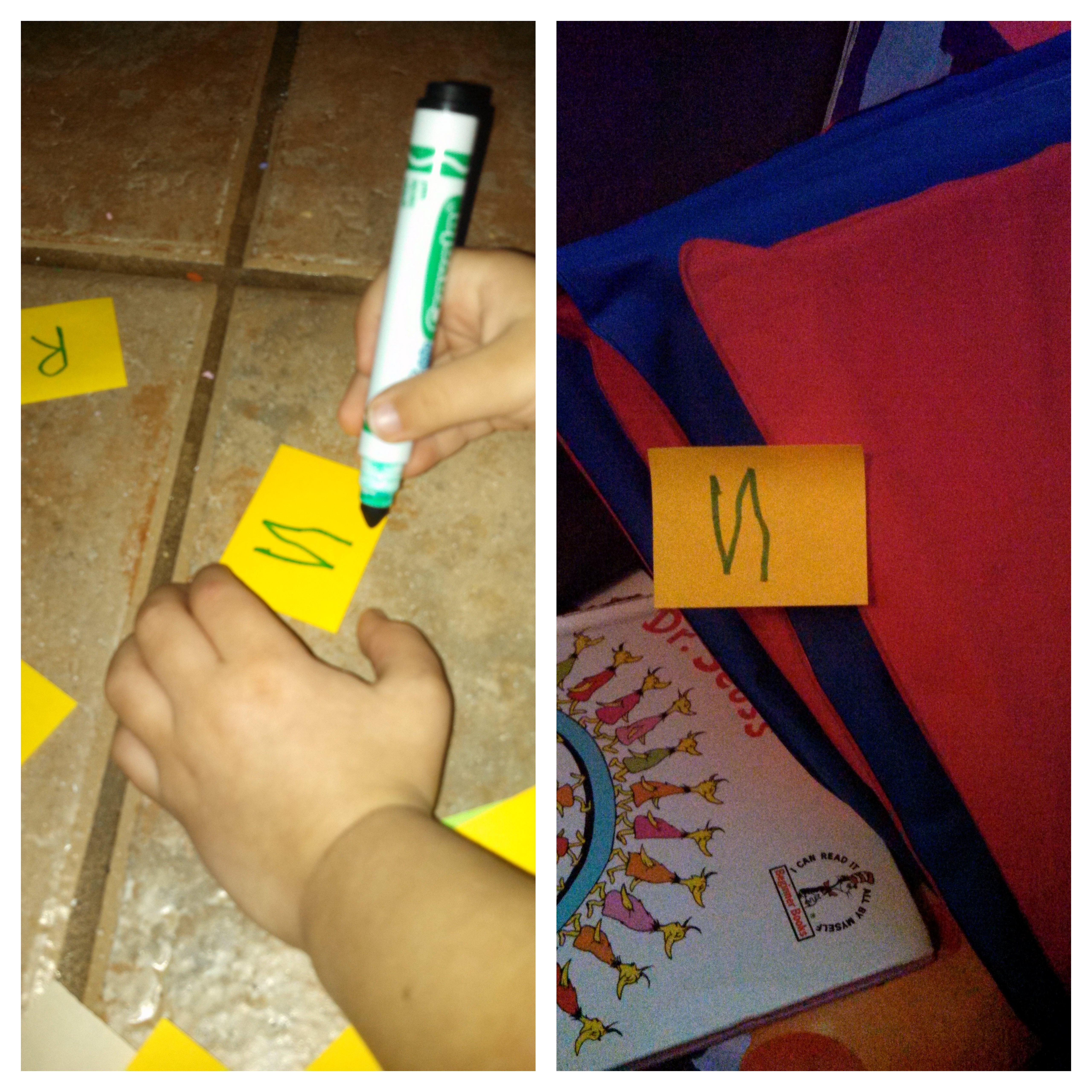
sticky note post 2 Y’all, “nap mat” was a tricky one!  Props to the kiddo!  He’ll get his Ns right one day 😉

Version #3:  For the child who has not mastered letter sounds:  You write the letters on the sticky notes and post them on the objects while your child hides his/her eyes.  Put the letter T on the TV, the letter B on a box, etc.  When he/she opens his/her eyes, call out a sound and he/she has to find the letter that is on an object.  (You can play hot/cold if he/she can’t find it right away).  When he/she finds it, you say, “Great job!  You found the /t/ for TV!  Say it with me /t/ /t/ TV!”

Version #4:  Instead of searching for the BEGINNING sound, search for the END sound of a word!  “What object ends in /l/?  That’s right, you found the doll!”

Version #5:  Rhyming:  Hold up a letter (ex. “B”) and say, “I’m looking for something that rhymes with “fox” but starts with /b/.”

Version #6:  Early reader, basic understanding of blending sounds in CVC (consonant/vowel/consonant words such as “cat”).  Write down simple words such as “mat,” “cup,” “box,” “doll,”  “TV” (my kids love when I throw that easy one in there ;-)) and your child has to sound out the word and stick it on the object.

Version #7:  Onset/Rime:  The “onset” is the first letter in the word and the “rime” is the part of the word that links it to other words in the same family (the part that makes it rhyme with other words with the same rime… get it?).  Write the “rime” of the word and your child has to write in the onset, and then go stick it on the object.  “What object ends in “-ook”?  Your child looks around the room, sees a “book,” writes in the first letter, and sticks it on the book.

Version #8:  Vowels:  search for the vowel in the middle of the word.  “Which object has the /o/ sound in the middle of the word?”  bOx, robOt, pOt, clOck, sOck

Version #9:  Vowels extended:  Go on a hunt to find 5 things that contain each of the 5 vowels.  Find 5 things with an /a/ sound as in cat, 5 with an /e/ sound as in bend, 5 with an /i/ sound as in pig, 5 with an /o/ sound as in lot, 5 with an /u/ sound as in under.

Version #10:  Syllables:  Choose an object and count the number of syllables in is name.  Put that number of sticky notes on that object.  Ex:  window:  win/dow = 2 sticky notes.  You can do this with the number of sounds in a word too!  Ex:  doll:  /d/ /o/ /l/ = 3 sticky notes.

Now, we’re experiencing an extremely rare “snow day” here in South Louisiana, so these are perfect games to play with your little ones while stuck inside, because, who doesn’t have sticky notes lying around?  Oh wait, ME!  Because we used them all up today!

I’m sure we will be pulling out all of the randomness that is in the “junk drawer” tomorrow to keep the kids happily entertained… or if the power stays on, it’ll probably be a junk food, pajama, and movie day in our house!  You just gotta have those sometimes!


Related Posts Plugin for WordPress, Blogger...

1 2 3 4 10