There are certain tasks that are fairly simple but when you throw kids into the mix, it can be downright miserable… especially when that task is to simply wait.
Take getting an oil change, for example. Today we were quite lucky to only have to wait about 45 minutes, but there have been times where it has gone longer than the estimated time.
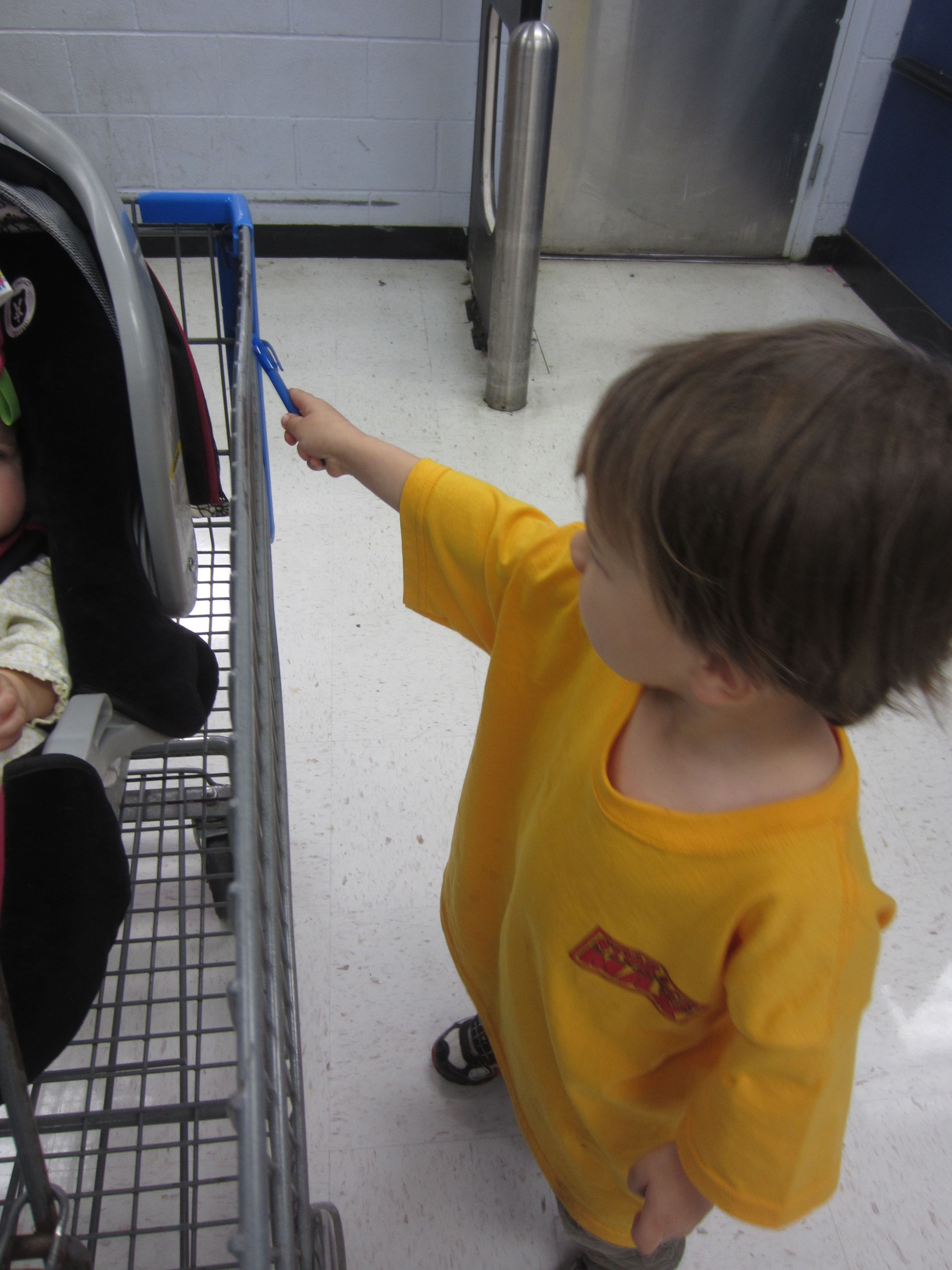
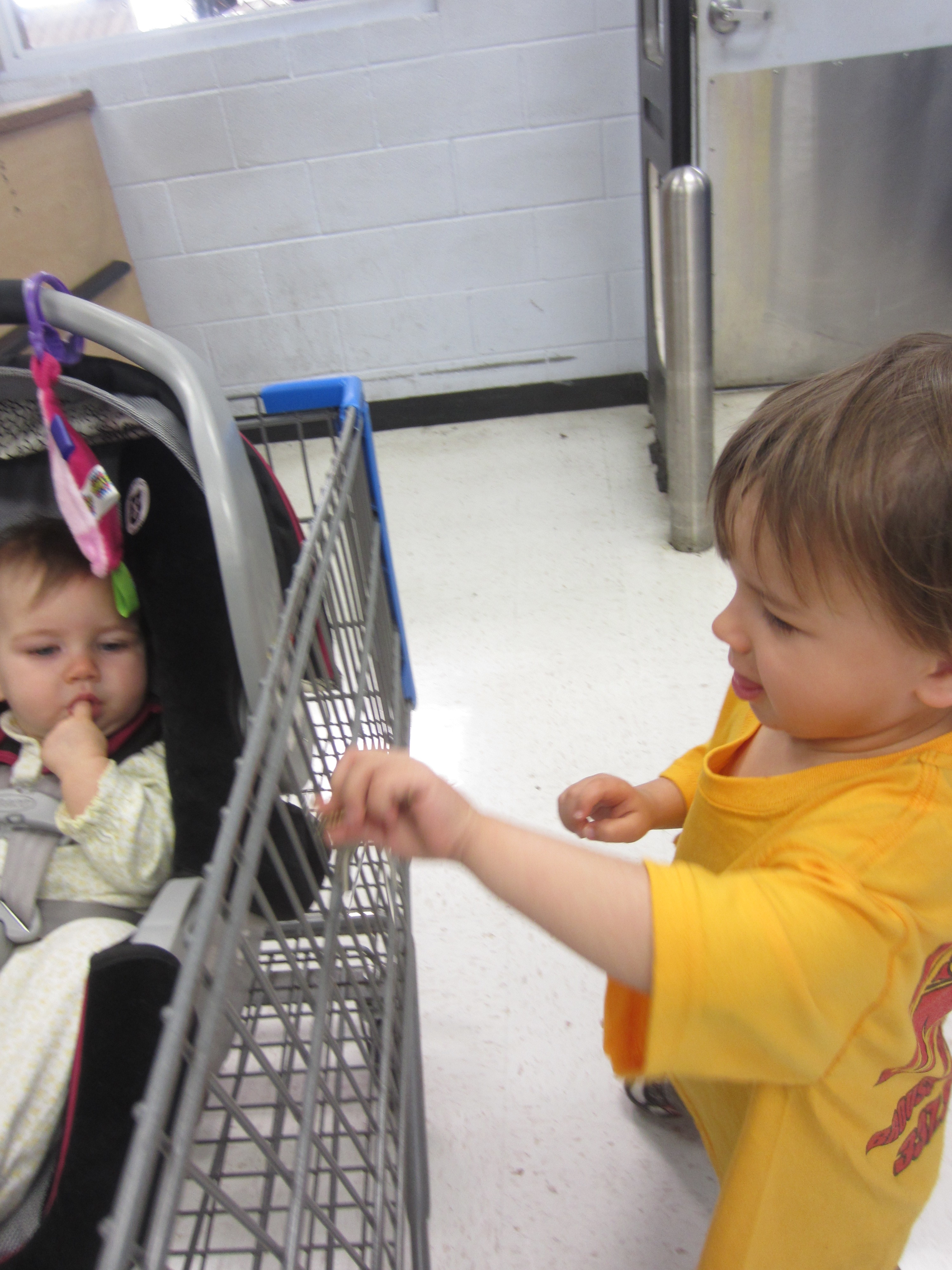
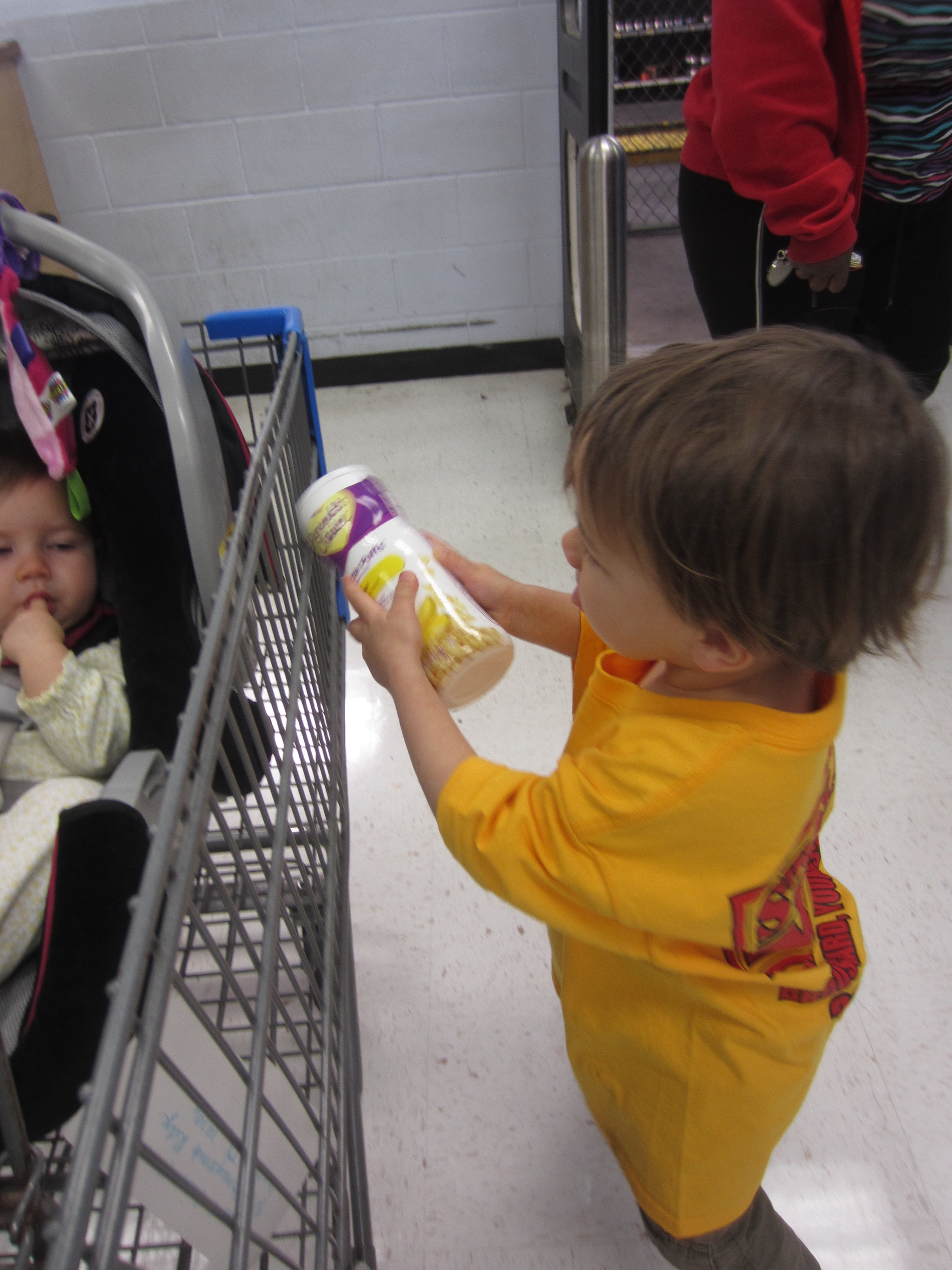
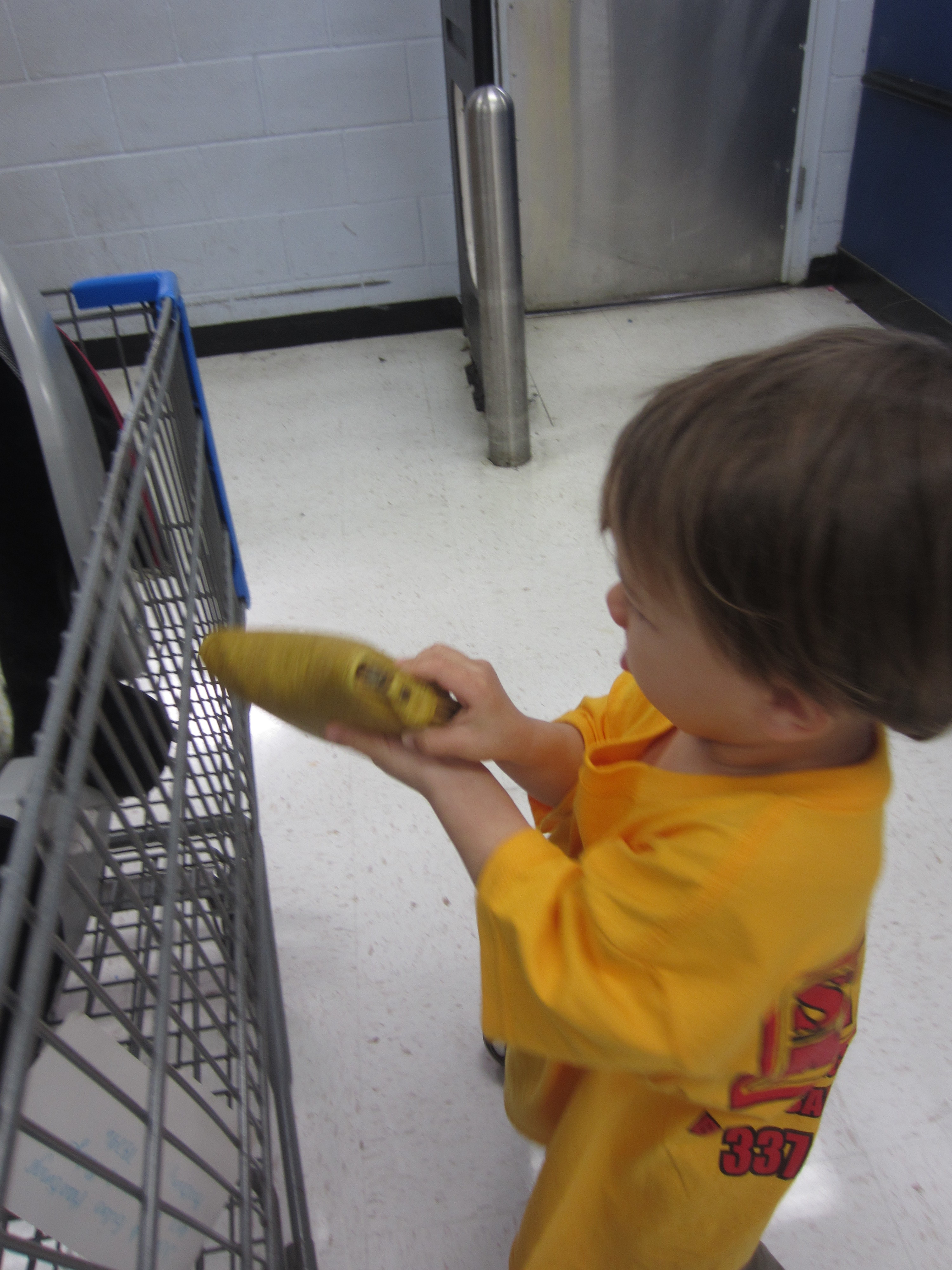
After about 2 minutes of everyone, including my toddler, cooing at my smiley 10 month old, we were already searching for a new game. Here is when I invented Buggy Xylophone (patent pending).
I pulled several items out of the diaper bag and we brushed each of them against the metal rungs of the basket.
Auditory Learning / Music skills
Mommy Teacher: “Does the pen make a HIGH pitched sounds or a LOW pitched sound?” (Make your voice go HIGH and LOW when saying those words.)
Mommy Teacher: “Does the wallet make a LOUD or a QUIET noise on the basket?” (Make your voice go LOUD and QUIET when saying those words.)
Mommy Teacher: “Let’s change the tempo. Can you move the pen fast across the rungs of the basket? That is a fast tempo. Now move the pen slow. That is a slow tempo.”
Listening Skills / Following Directions / Counting / Rhythm
Mommy Teacher: “I can tap 3 times tap tap tap. Now you tap 3 times.”
Mommy Teacher: “Repeat after me tap pause tap tap.”
Compare/Contrast
Mommy Teacher: “Which object is loudest?” “Which has the highest pitch?”
Grouping Like Objects (Science and Math)
Mommy Teacher: “The spoon and the pen are both hard and are both LOUD. The wallet and the purse are both soft and are both QUIET.”
Predicting (Science Skill)
Mommy Teacher: “Do you think the spoon is going to be LOUD or QUIET?”
Opposites
Mommy Teacher: “The pen is LOUD. The wallet is the opposite of LOUD which is what?”
Vocabulary
Loud, quiet, high pitch, low pitch, opposite, tempo, fast, slow
And that, my friends, is how you annoy the other patrons at Walmart… OR that is a great way to entertain your kids while waiting for your car to be ready. I prefer the latter.
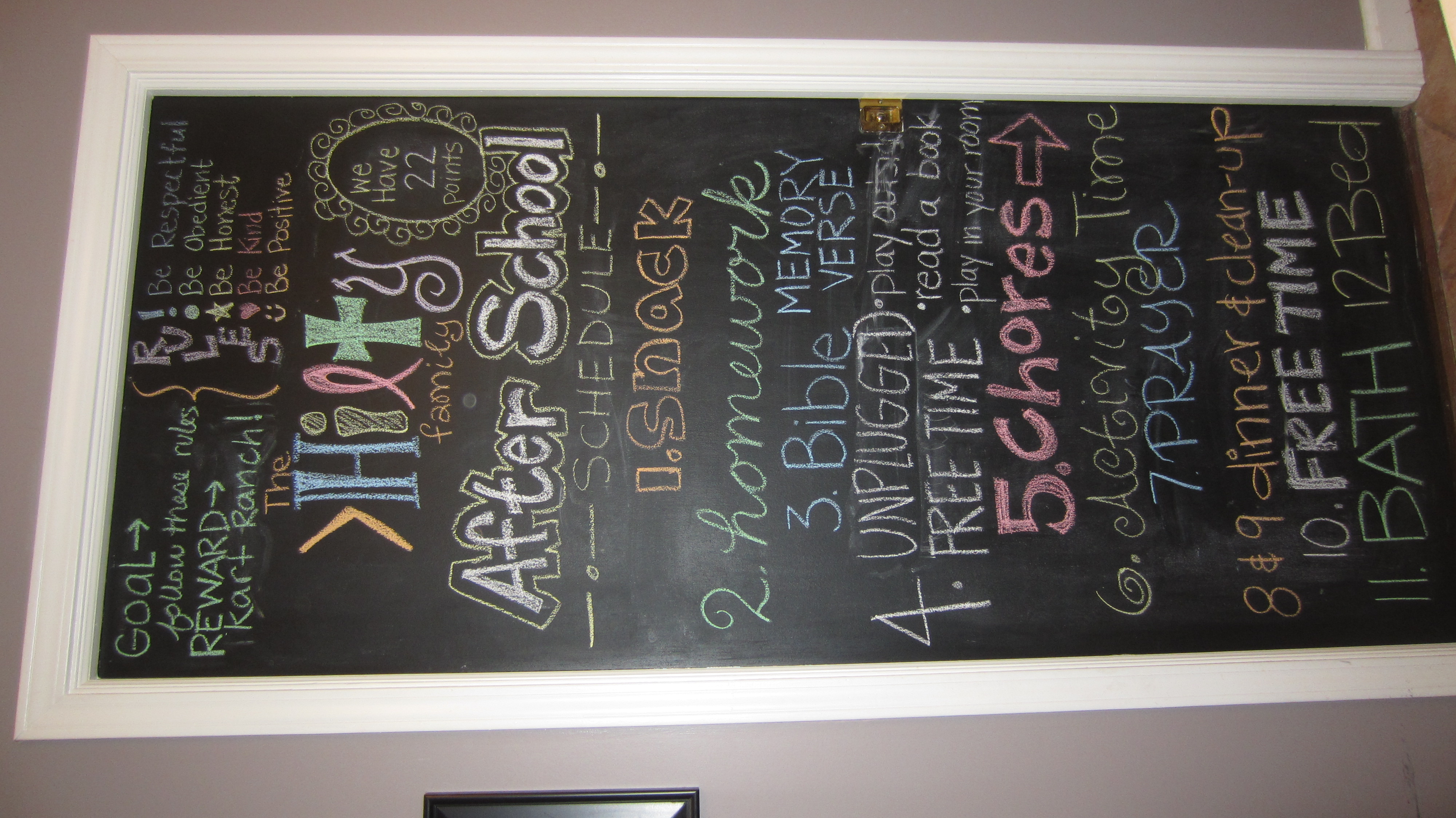
I recently wrote a post about a Routine Change for our after school schedule that I posted on our chalkboard door.
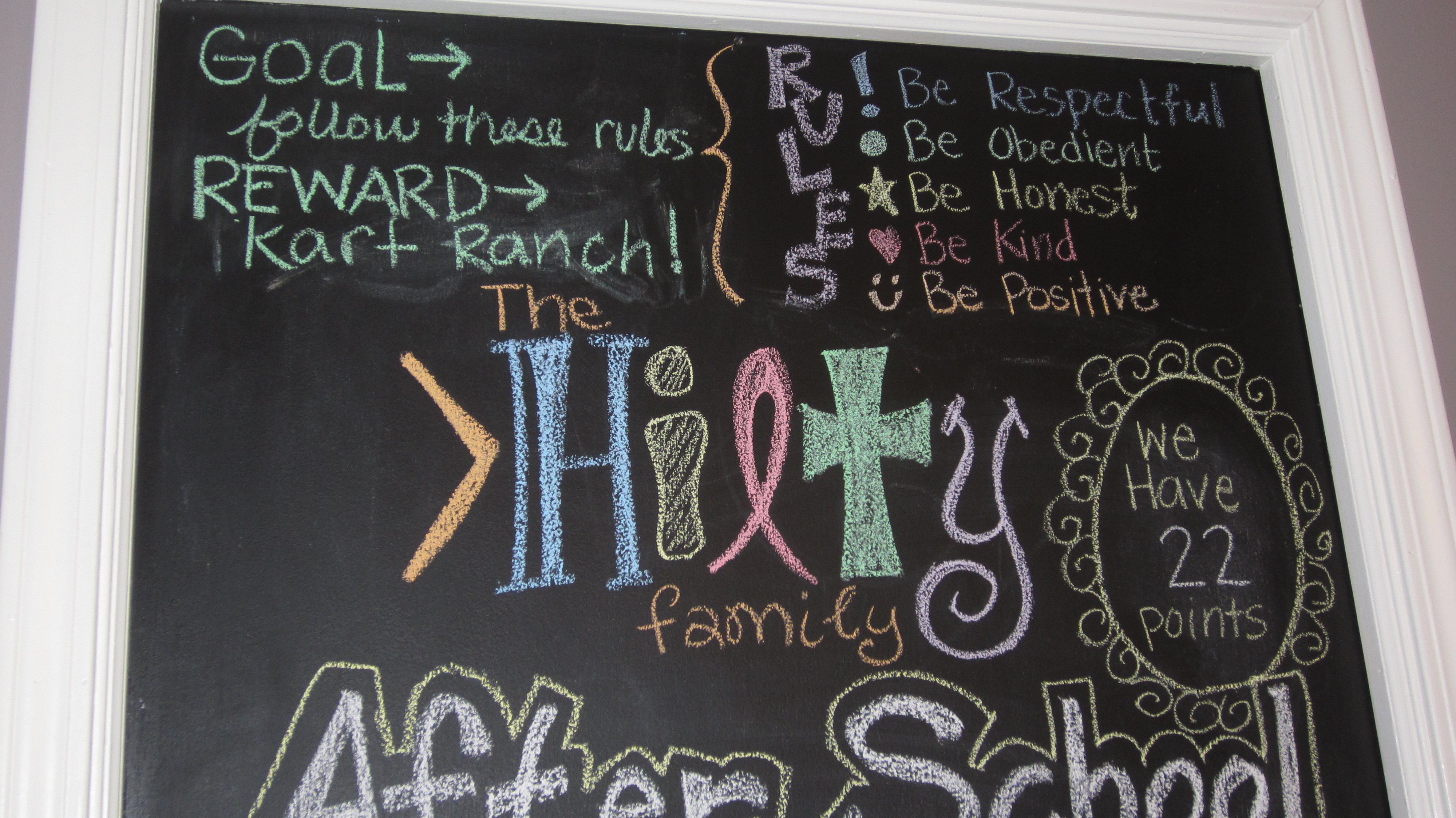
I also posted our house rules on that same door, in plain view to remind us how to behave throughout the day.
1. Be Respectful
2. Be Obedient
3. Be Honest
4. Be Kind
5. Be Positive
I once visited a classroom that had just two rules: be respectful and be obedient. Brilliant! I mean, you really don’t need much more than that because those are two rules that any type of disobedience can fall under. I call them “umbrella” rules.
I decided to use that in my house. Once your kids get a full understanding of respect and obedience, they are extremely effective for toddlers. However, those are BIG words for little kids, so don’t expect them to immediately understand them. However, if you use the same language a few times while modeling each of the behaviors, then your 2 year old will start telling you all about the appropriate behaviors he or she just displayed. (They also may start questioning you about your appropriate or inappropriate behaviors – but that’s all a part of the learning process).
How to teach your kids about respect and obedience:
-Define the new vocabulary
“Respect means you are being nice and talking nice to your mommy, daddy, siblings, friends and other adults. ”
“Obedience means you listen the first time and always remember the appropriate behaviors you should be showing at all times.
-Model the new vocabulary
“‘Mommy, may I please have some milk?’ is a very respectful way to ask for something. Can you say that? ::wait:: Great! I love how you used your manners and talked to me in a sweet tone. I appreciate you showing me respect. That was a very respectful way to ask me for something.”
“If I tell you to please pick up your clothes, a respectful response should be, ‘Yes, ma’am,’ and then you show your obedience by picking up your clothes right away. Listening the first time every time is a great way to be obedient.”
-Show the opposite behaviors and define them
“If I tell you, ‘Gimme some milk!’ Is that showing respect? No. That is called disrespect and it is not allowed. How can we rephrase or say it again in a respectful tone? ::wait:: That’s right! You say, ‘May I please have some milk?’ I love how respectful that sounds.”
“If I ask you to pick up your clothes and you don’t look at me, don’t listen to me, or tell me, ‘no,’ that is called disobedience and it is not allowed. Instead, what should we do? ::wait:: You’re right! Be obedient! We do the task right away! The VERY first time you are asked to do it! But first, how do we show respect when asked to do something? ::wait:: You’re right. We say, ‘Yes, ma’am.'”
-Model different scenarios of respect, disrespect, obedience and disobedience and have your child label each
“Is this respect or disrespect: ‘Moooooom I wanted to play with that toy!’ ::wait:: “Right. Disrespect. Do we allow disrespect? No.”
“Can you please throw this away? Yes, ma’am! ::throw trash away:: Was that obedience or disobedience? Right! Say, ‘great job, Mommy! Thank you for being obedient!'”
-Have your child generate responses from cues
“How can we show respect to our friends? ::wait:: You’re right… share our toys! Great idea!”
“If I ask you to clean up your spilled milk, what would you do to be obedient?”
-Praise and repeat language
“Thank you for being respectful!”
“I love how you were being obedient! You listened the very first time!”
-Frequent Reminders
“The way you said that was disrespectful, can you please change your behavior and use a respectful tone?”
“I have already told you once to do _____. You have not done ____. Is that being obedient?”
Sure, kids slip up from time to time, but by effectively setting your expectations for behavior and being consistent with praising and correcting, your child will likely choose to meet those expectations.
Now after having these rules for a while, I began to notice a few behaviors that my child was displaying that I still wanted to change. It was necessary for me to set aside a few more rules to clarify which behaviors I did not like, even though these rules can also fall under the first two big umbrella rules.
3. Be Honest 4. Be Kind 5. Be Positive
My kindergartner, bless his little imagination, can get himself into a lot of trouble with the stories he tells. He is definitely the “dog-ate-my-homework” kid, so we instated the “be honest” rule.
He and his toddler brother were also starting to pick on each other around the same time. Sure, they were both being respectful and obedient toward Mom and Dad, but were they showing the same courtesy to each other? No. So we instituted the “be kind” rule.
Our last rule is to “be positive.” Sure, we can all have bad days (even Mommies and Daddies), but our newest rule is to take a few minutes to yourself to reflect, and then when you return to be with the rest of the family, you must come with a new and improved new attitude. And it must be positive.
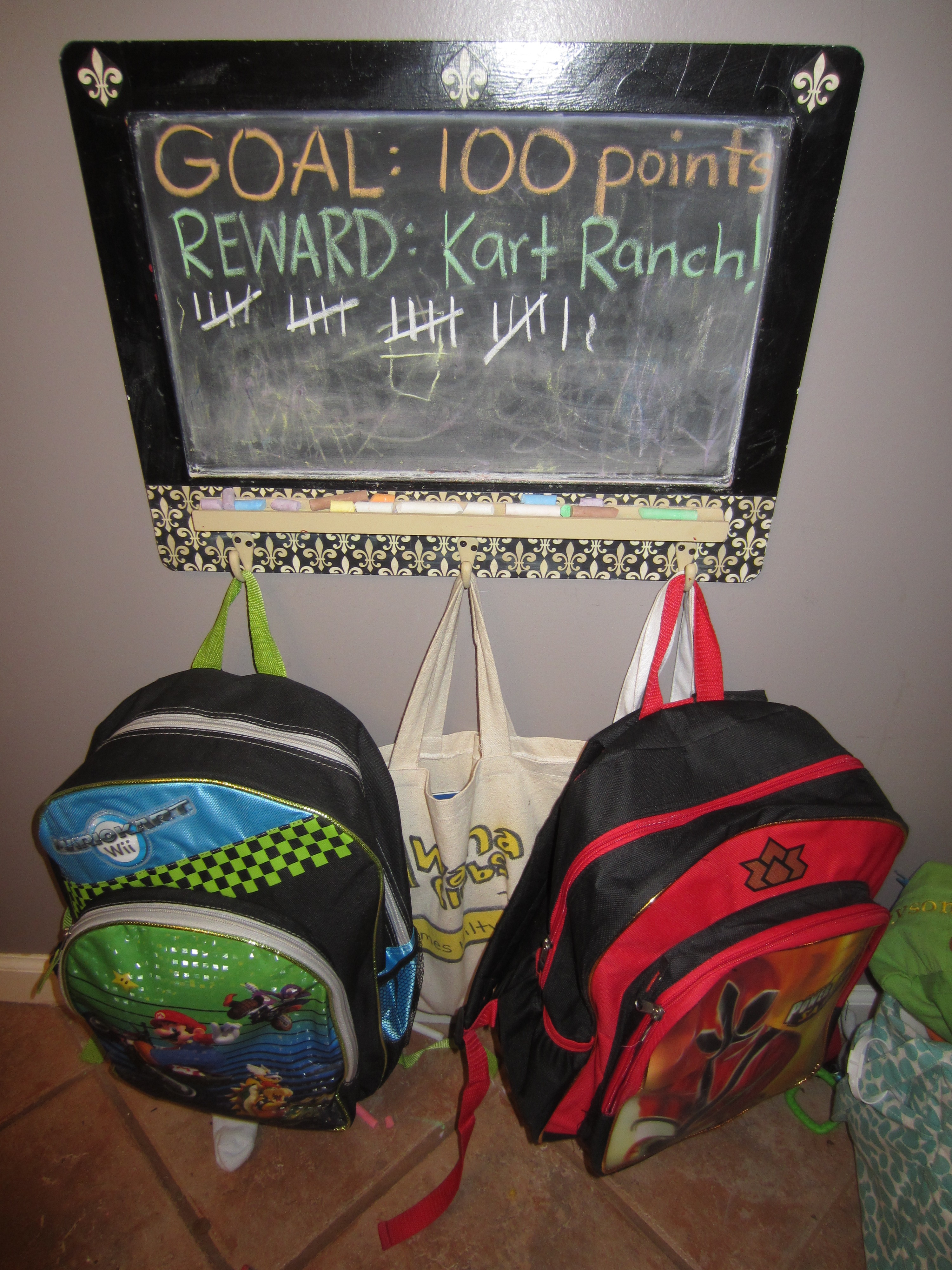
After all is said and done, I have been rewarding my kids with tally marks when they follow the rules. We set a goal for our family: 100 tally marks = a trip to Kart Ranch (similar to Chuck-E-Cheese). It’s been way more positive than punishments for not following the rules and they have been more obedient all around, knowing that there is a reward – a positive consequence – at the end. Just a little encouragement for them.
What kinds of rules do you have in your home? Which behaviors do you want your kids to change? What new rules would you like to add to your list of expectations for your kids to follow?
In my first year in the classroom, I was complaining to my mentor teacher about some student behaviors that I just was not liking – just venting my frustrations about my ill-behaved children. I will never forget what that teacher told me… “Well, then change them!”
Duh! I don’t know why I was so stuck on doing the same things over and over and yet expecting better results. Even worse was that I was blaming the kids for acting up when, in reality (as hard as this was to admit), the behavior plan and procedures I had created were the problem.
I think about that bit of advice quite often when it comes to my own children. We started the school year off with a great routine for homework. A set place, a set time, materials at the ready… but as the year has progressed, I was hearing more and more complaints about homework: “Can I puh-lease have a snack first?” “I want to sit over heeeeeere instead.” “Do I HAVE to do homework tonight?” “I don’t like homework!” “Can I go play outside first?”
Something’s gotta change.
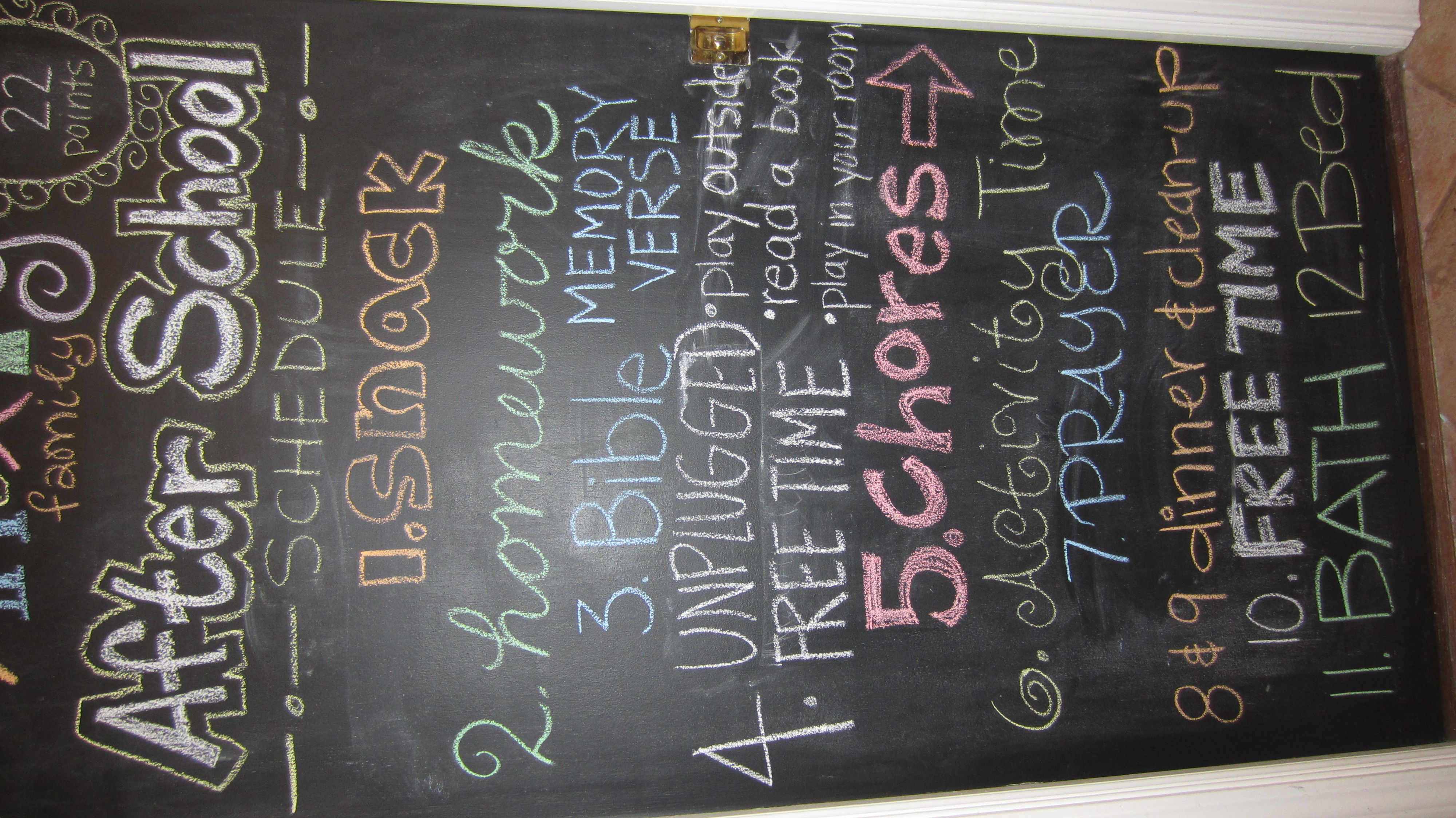
I developed a new plan and posted it in the middle of our dining room for everyone to see…
After School Schedule
1. Snack Time. This was the biggest reason my kids were complaining about homework… their tummies were rumbling!
2. Homework. I make up homework for my 3 year old (something easy for him to do on his own so I can assist my kindergartner). I haven’t had any complaints since it is written on the board and they must finish steps 2 and 3 to get to the much-anticipated step 4!
3. Bible Memory Verse. Since this is written on the board, we have practiced our memory verses and read our Bibles EVERY DAY this week! What a great reminder for me too!
4. Unplugged Free Time. The kids may choose to play outside, read a book or play quietly in their room. They may NOT play video games, use the computer or turn on the TV. This is normally the time where I feed the baby and begin dinner prep, so they know that mom is unavailable at this time to play. Any fighting means free time ends immediately and we have longer chore time.
5. Chores. The kids have to feed the dogs so they aren’t begging at the table for dinner, clear the table, and pick up toys in the living room. (I will write another post on chores really soon!)
6. Activity Time. By this time, my husband is home from work. One of us gets started on dinner and the other does an activity with the kids (play-dough, building blocks, legos, coloring, etc.) This makes up for the fact that I am not available to play with them during Unplugged Free Time.
7. Prayer. At this time we are all seated for dinner. I made sure to put PRAYER on our list so they would not start eating before praying.
8. Dinner & 9. Clean Up. By putting both of these on the list my kids have been waiting until they are completely finished eating before they start getting up and down out of their chairs. Dinner time has not been the normal circus act that it normally is after having our new routine in place.
10. Free Time. At this point, the kids are allowed to play video games, watch TV, or play on the computer. Funny, though… since starting our new after school activity list, we have BARELY turned on either of these electronics!!! This is a great change as we had gotten into the nasty habit of having something on all of the time.
11. Bath and 12. Bed. We have had ZERO complaints about either of these because the children can SEE these on the list! They KNOW it’s coming after their Free Time and they have been so compliant! It’s magic!
What behaviors, procedures or routines do you want changed in your house? What can you do to change them now? The key to our new routine is that it is posted for everyone to see. Find a great spot to post any new changes you make so your children will be reminded of them frequently. It will definitely prevent a few more gray hairs from poking through, and hopefully you will have a few less tantrums on your hands!
Hi! I’m Casey from Kidspired Creations! I have been a guest blogger a few times on The Mommy Teacher am very excited to now be co-blogging with Jessica! I am a former Pre-Kindergarten and Kindergarten teacher and am currently a stay-at-home Mom of 3 little ones ages 5, 3 and 10 months.
I have to admit that despite my best attempts, not all of my Mommy Teacher moments get the best reception from my kids. I think if I say, “Let’s make a pattern!” one more time, my 3-year-old might throw a toddler tornado-sized tantrum.
Yes, my kids can get burnt out on lessons from this Mommy Teacher; however, I know how to win them over every time: food, particularly pizza.
I recently saw a recipe on Pinterest that involved cutting zucchini in half long ways, carving out the insides and filling them with various deliciousness. I decided that these “zucchini boats” would make great pizza crusts! This idea perked interest with my kids so quickly that I couldn’t prep fast enough.
-Pre-heat oven to 350 degrees. Cut zucchini long ways and spoon out a trench on the inside. Spread a few spoonfuls of pizza sauce inside. Fill with mozzarella cheese. Top with pepperonis. Place on the oven for 15-20 minutes or until zucchini is tender.
Easy peasy… and so delicious that even my super-picky 3-year-old was digging into the “green crust.”
Here are the different skills we covered while making our pizzas:
Math
– Sequencing: “What is the first step to making our pizza? What comes next?”
– Measuring: “How long is our zucchini? Let’s measure in pepperonis.”
– Adding: “Our pizza needs 3 pepperonis. There are 2 pepperonis on the pizza now. How many more do we need to add to make 3?”
-Counting: “How many pepperonis are on your pizza?” How many pepperonis are there all together?”
-Multiplying: (for the school-aged child) “If we have 3 pepperonis on 10 pizzas, how many pepperonis are there all together?”
-Time: “Our pizzas need to cook for 20 minutes. Let’s set the timer.”
Motor Skill Development
-Pouring and spreading the sauce with a spoon
-Sprinkling the cheese using our fingers
-Using the pincer grasp to separate the pepperonis
Language Skills
-Sequencing Vocabulary: first, second, next, then, last, before, after etc.
Health and Nutrition: Learning about making healthy choices by substituting with fresh vegetables and what food groups are being included in dinner
Following Directions and Recipes: Following step-by-step or a series of directions is different than following one direction at a time. “So, I put the pepperonis on first right??? No? Well, what do the directions tell me to do?” You can take this a step further than I did by drawing or writing out the recipe for your child to have a visual to follow.
Social Behaviors: being a happy helper in the house! It is important for kids to take ownership over household tasks and doing it with a happy heart!
* * *
My kids do not like to try new things, but since they made the dish themselves they were eager to dig right in! More surprisingly was my 3-year-old who didn’t shed any tears before his taste test! That’s quite an accomplishment at our dinner table! Everyone was happy… even the baby who got pureed zucchini that was scooped out of the middle of our boats. Bonus!

![IMG_6932[1]](https://themommyteacher.com/wp-content/uploads/2013/03/IMG_69321.jpg)
![IMG_6931[1]](https://themommyteacher.com/wp-content/uploads/2013/03/IMG_69311-e1362537241250.jpg)
![IMG_6928[1]](https://themommyteacher.com/wp-content/uploads/2013/03/IMG_69281.jpg)
![IMG_6933[1]](https://themommyteacher.com/wp-content/uploads/2013/03/IMG_69331.jpg)
